







How Much Does a Smith Machine Bar Weigh? A Complete Guide
If you've ever aced a set on a Smith machine but struggled with the same weight on a free barbell, you aren't weak—you were just using a different bar weight.
So, how much does a bar on a Smith machine weigh? It ranges from 2.7 kg to 20 kg (6 to 45 lbs). Unlike a standard 20 kg Olympic barbell, a Smith machine bar has no single standard. Its weight depends on the machine's design, materials, and whether it uses an internal counterweight.
In this guide, we'll cover what the Smith machine is, look at typical weight ranges, and explain the key factors that determine how heavy a Smith bar actually is.
What is the Smith Machine?
Simply put, it is a barbell secured inside vertical or angled steel guide rails. Equipped with safety latches along the frame, it allows you to lift heavy without a spotter—if you fail a rep, a quick wrist hook locks the bar in place. Because the fixed track handles stability for you, the physical feel and effective resistance differ significantly from a free-moving barbell.
7 Types of Smith Machines
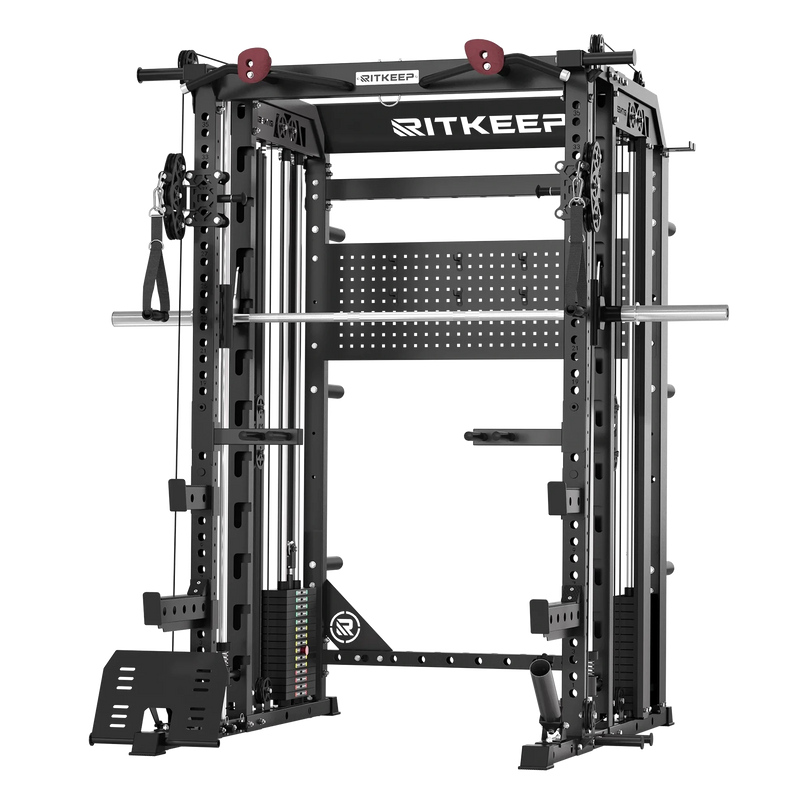
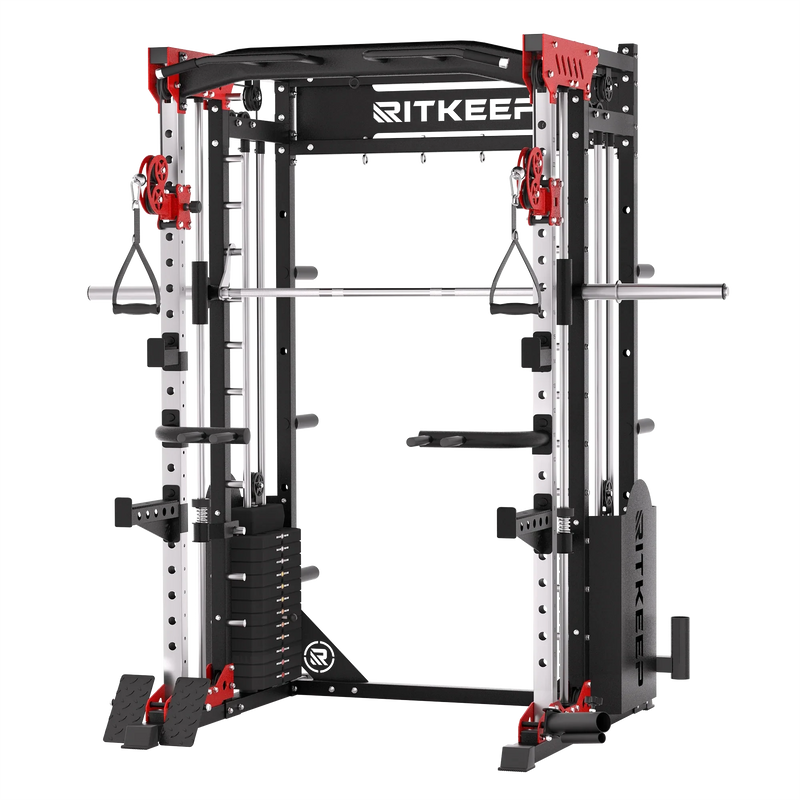
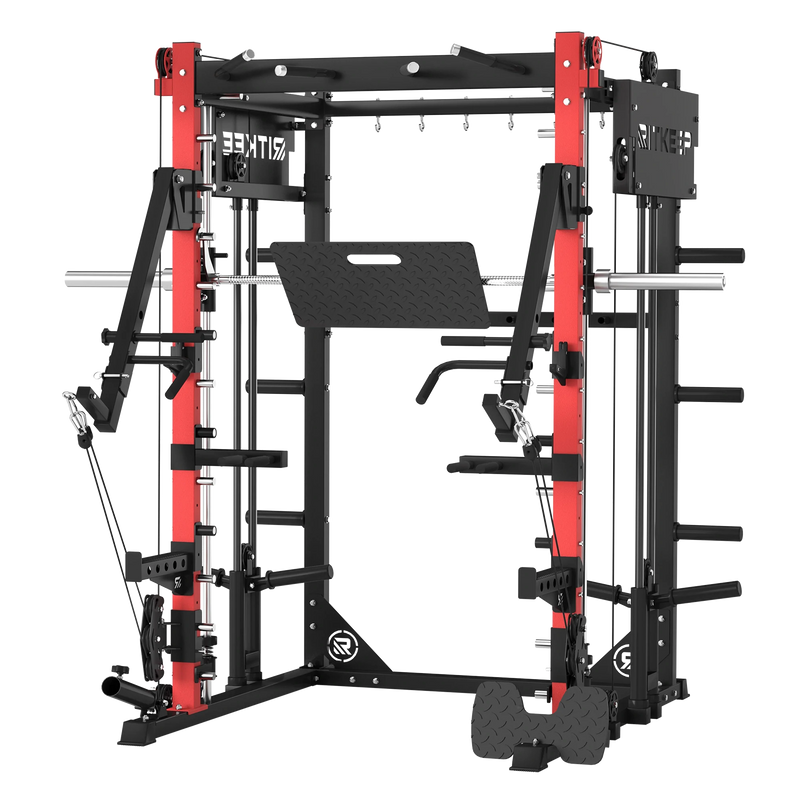
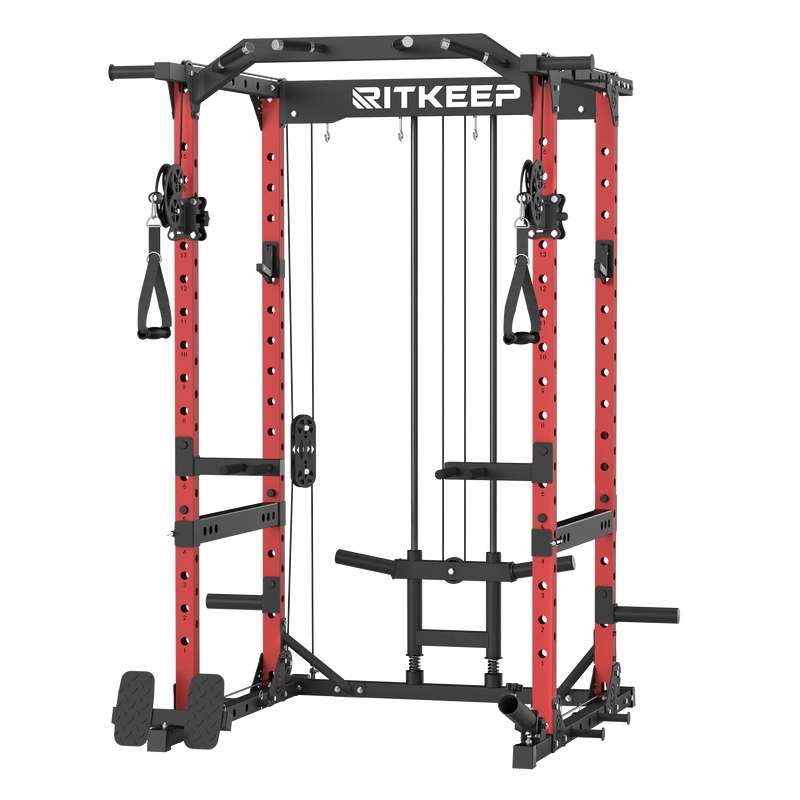
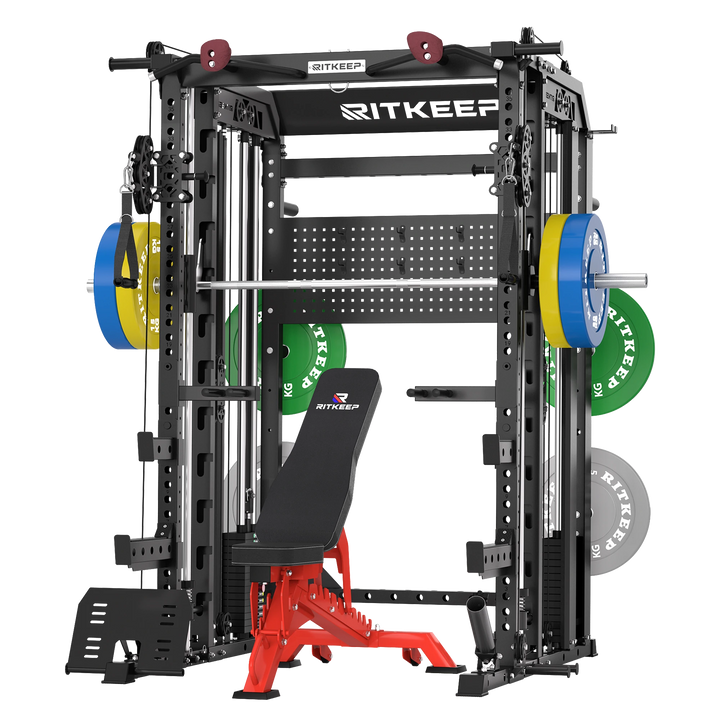
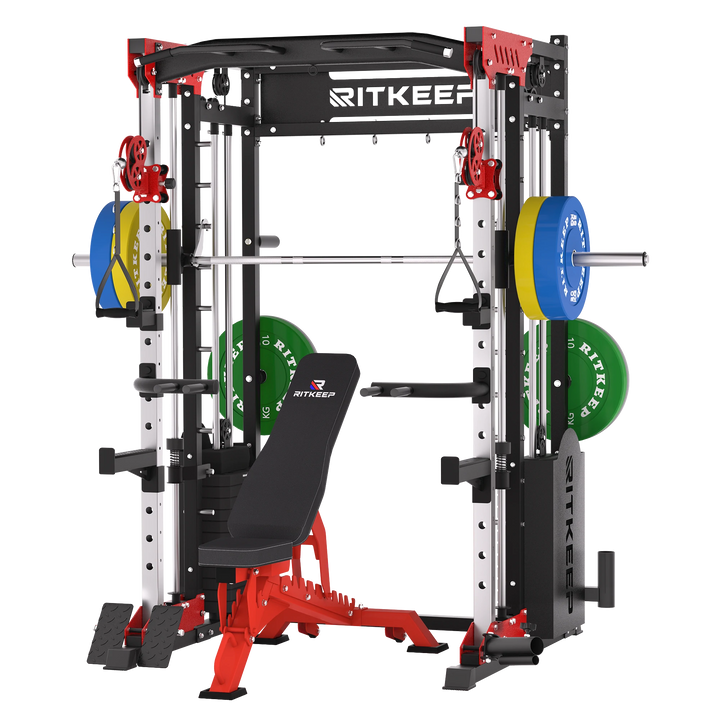
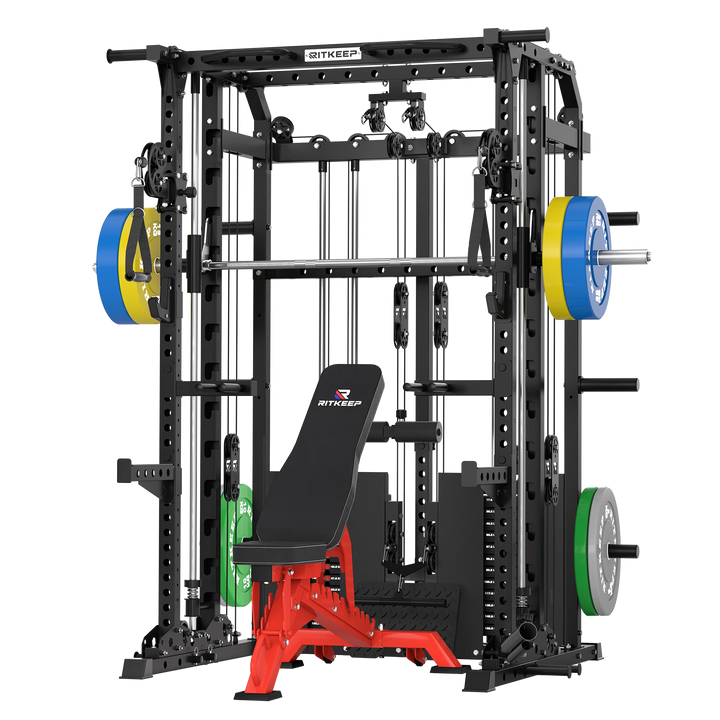
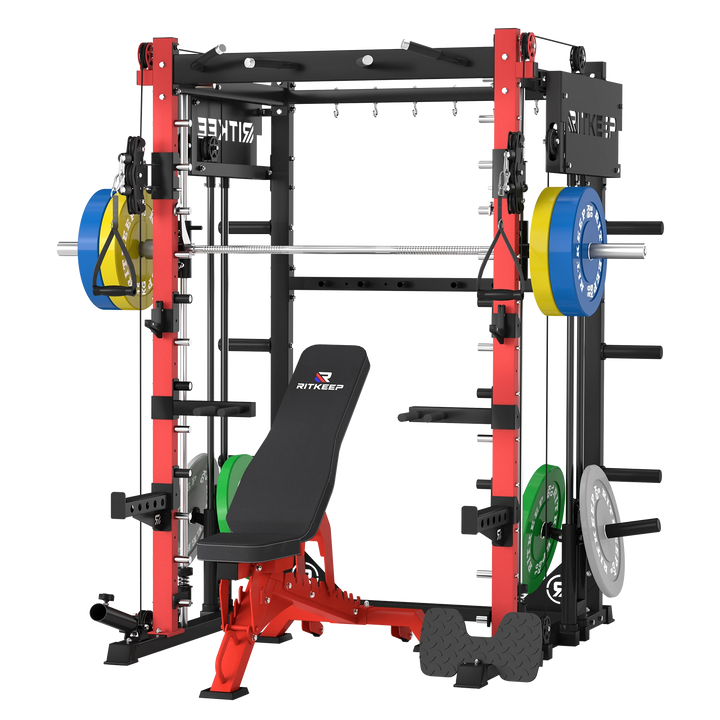
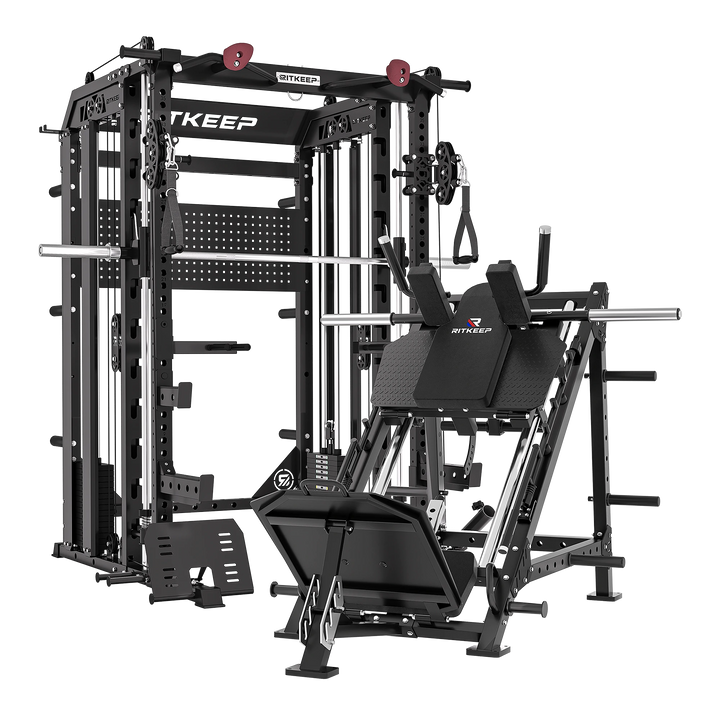
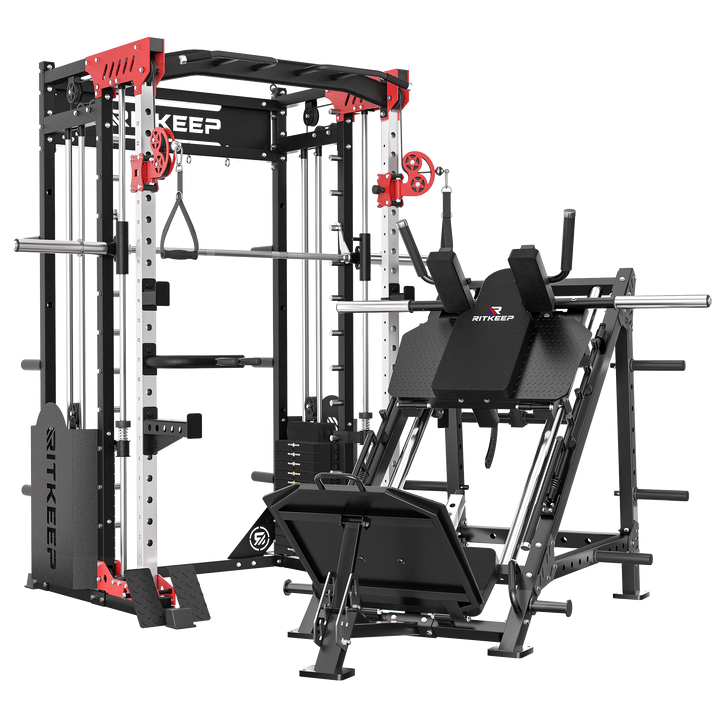
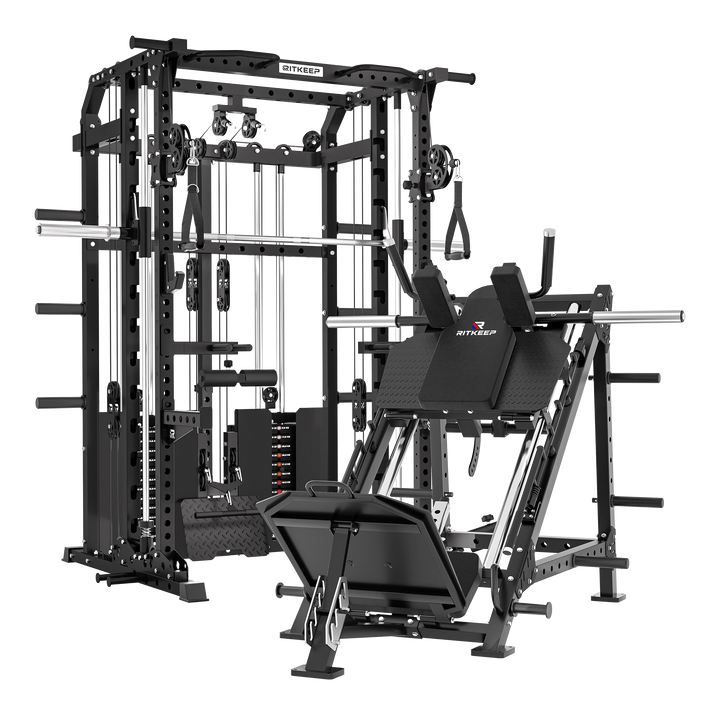
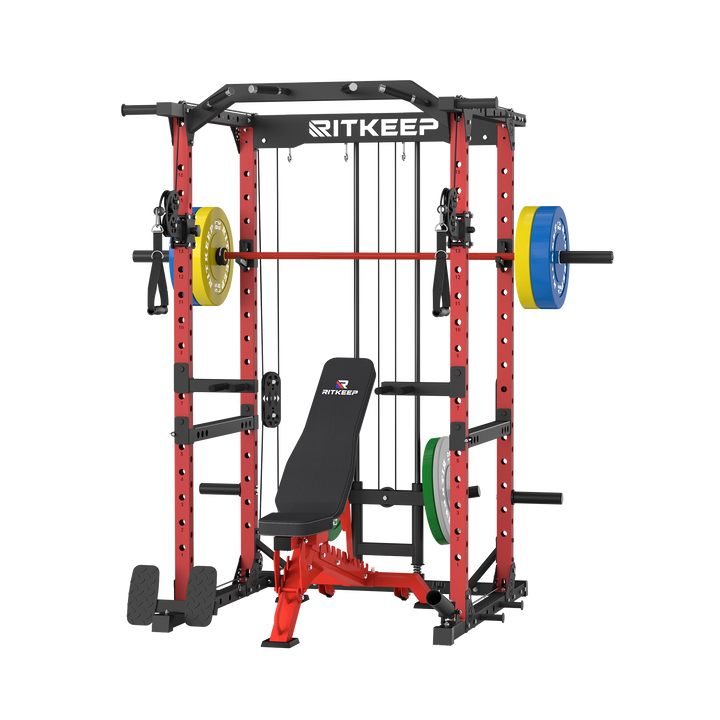
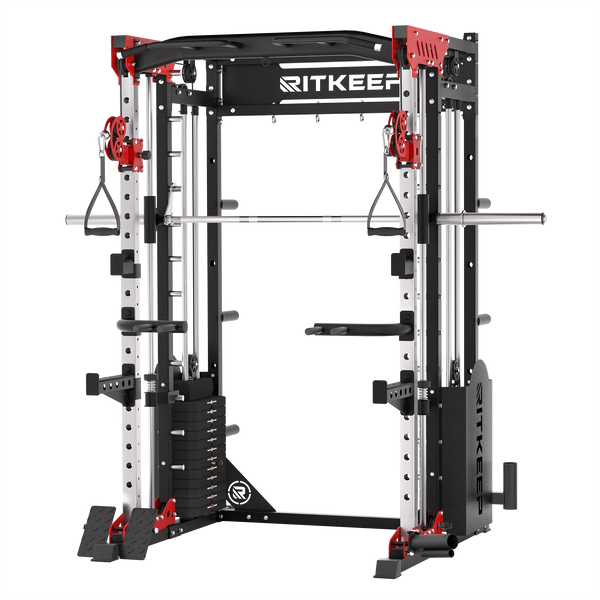
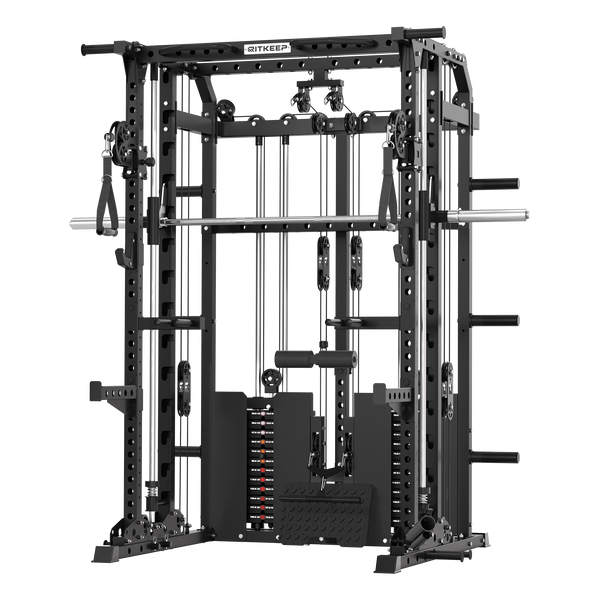
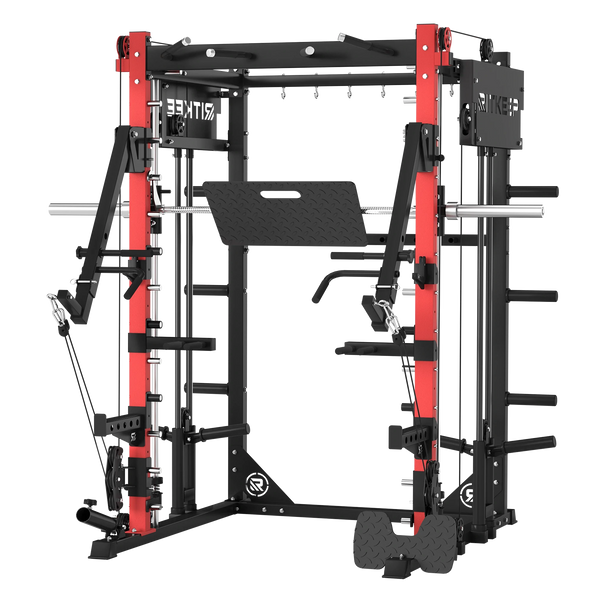
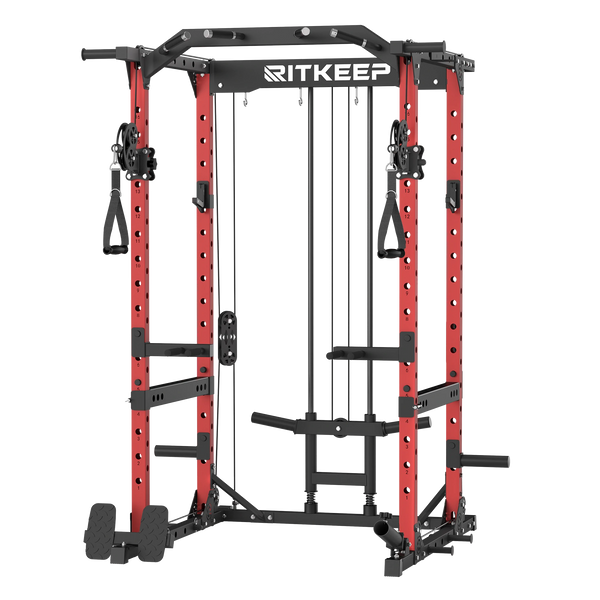
Not all machines are built equal. Whether you are training in a commercial gym or setting up a home workspace with versatile gear like a Ritkeep Fitness Smith machine, you will encounter seven primary designs that directly influence how heavy the bar feels:
Standard Vertical Smith Machines
This classic 90-degree design features a rigid vertical path that forces the bar straight up and down. With no internal assist mechanisms, its starting weight comes purely from the heavy steel used in the bar and hook assembly.

Counterbalanced Smith Machine
Traditional Smith bars often have a starting weight of around 15 kg (33 lbs). However, counterbalanced models use internal cables and hidden weights to offset part of the bar's weight, reducing the effective resistance and making the bar feel much lighter.
This counterbalance system is one of the main reasons why Smith machine bars can have different starting weights. The difference between a standard and a counterbalanced Smith machine design affects the amount of resistance you feel when lifting.
For example, the RitKeep Nimitz N1 uses a counterbalanced system to reduce its 15 kg Smith bar to as low as 2.5 kg (5.5 lbs), making it easier for beginners, seniors, and controlled training.

Linear Bearing Smith Machine
The bar carriage glides over smooth steel ball bearings along the guide rods to deliver a frictionless movement path. Because there is virtually no mechanical drag, the weight you feel is an accurate reflection of the bar's actual physical mass.

All-in-One Smith Machine
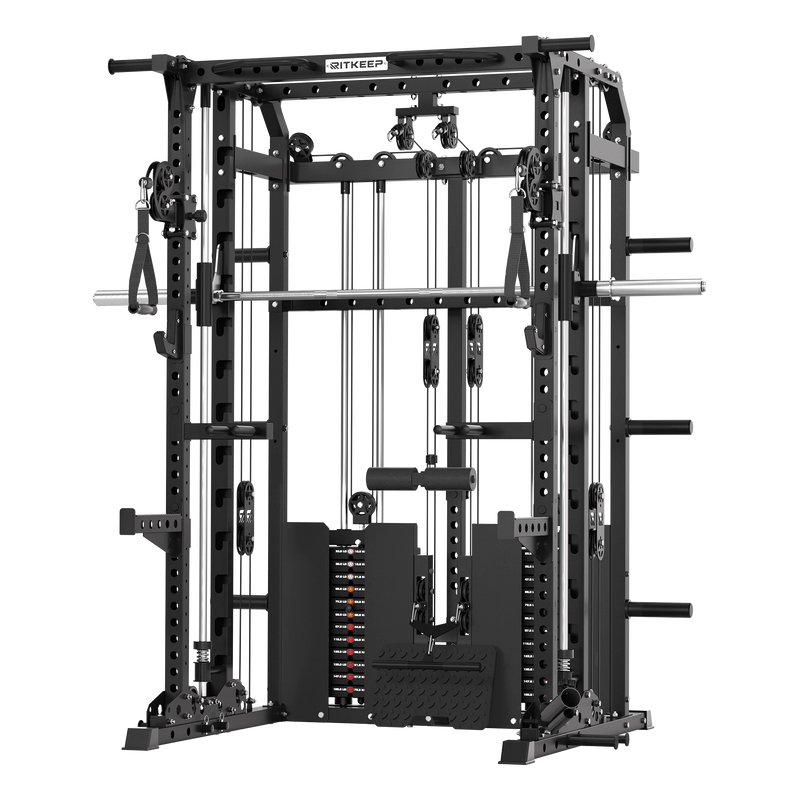
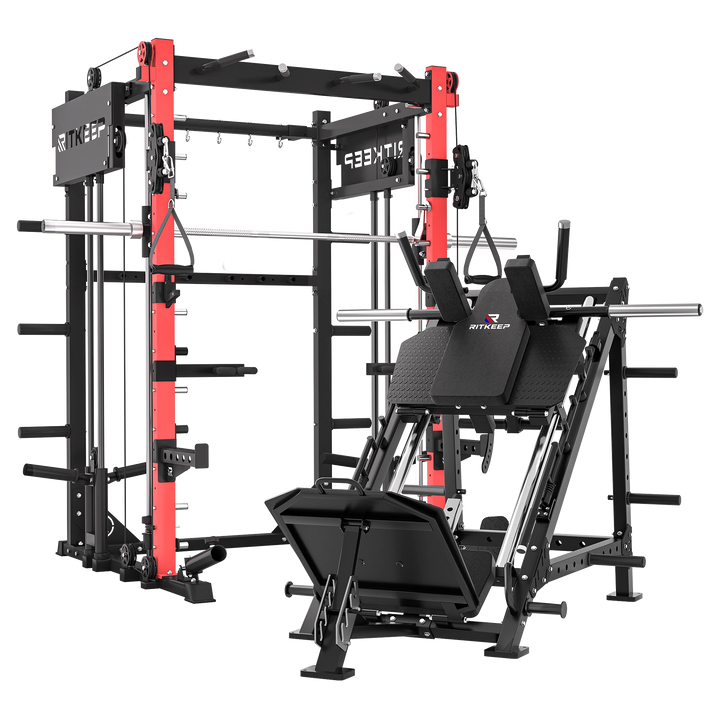
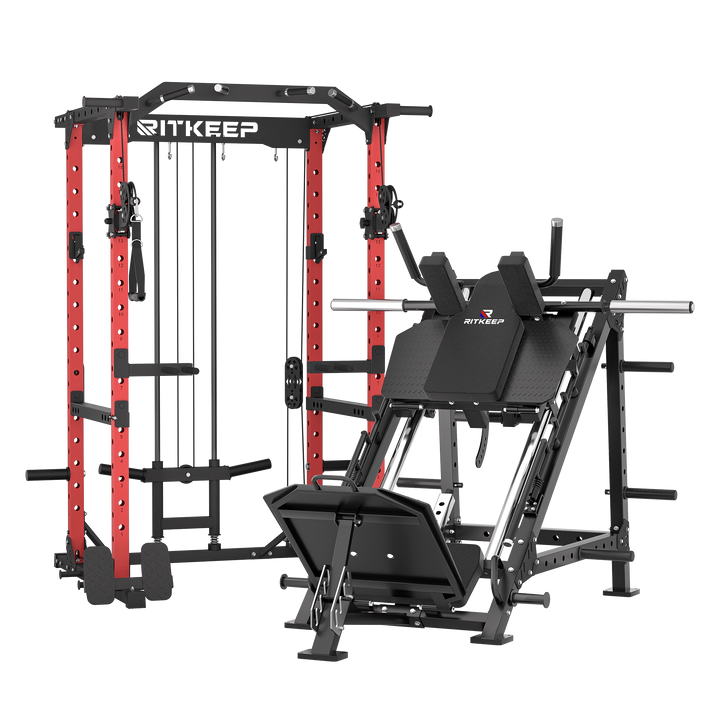
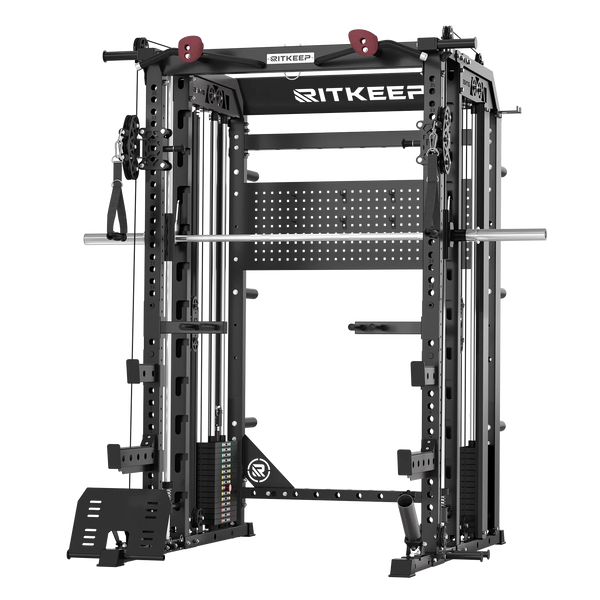
Common in versatile home setups, such as those designed by Ritkeep Fitness, the all-in-one Smith machine combines a Smith machine, cable machine, power rack, and row machine in one footprint. Its bar weight is optimized to offer structural stability while remaining easy to use for daily home training.

3D Smith Machine
This hybrid design allows the bar to move both vertically and horizontally to mimic a natural free-weight movement path. However, the extra carriage tracks required for 3D motion make the overall bar assembly physically heavier than standard models.
Angled Smith Machine
Features guide rails tilted at a 5- to 7-degree angle to align with the natural biomechanical arc of human joints during presses and squats. Because the slope transfers a tiny fraction of the load to the frame, the vertical resistance can feel slightly lighter.
Bushing / Plain Bearing Smith Machine
A budget-friendly option that uses synthetic sleeves sliding directly over steel guide rods rather than ball bearings. While durable, the extra sliding friction can make the empty bar feel slightly stiffer during slow, controlled reps.
What Determines the Weight of a Smith Machine Bar?
When asking how much is Smith machine bar resistance, several mechanical factors determine both the actual bar weight and the resistance you feel during training.
Bar Construction
The construction of the Smith machine bar affects its actual weight.
Factors include:
- Steel material and thickness
- Bar length
- Sleeve design
- Integrated hook mechanisms
Heavy-duty bars typically use more material and stronger components, increasing overall weight and load capacity.
Counterbalance System
Counterbalanced Smith machines use cables and weight stacks to offset part of the bar load.
This reduces the effective resistance and makes the bar easier to move, especially for beginners, lighter training loads, or rehabilitation exercises.
Bearing and Rail Mechanics
The rail system determines how smoothly the bar travels.
- Linear bearings: Reduce friction and provide smooth, consistent movement.
- Bushings or plain bearings: Create more sliding resistance, which can increase the force needed to start and control the bar.
Although the bearing system does not change the actual bar weight, it significantly affects the lifting experience.
Movement Path and Machine Design
The Smith machine's movement path can also influence how the resistance feels.
Vertical, angled, and 3D Smith machines use different rail designs that affect the bar trajectory and exercise mechanics. However, the actual bar weight is primarily determined by the bar construction and mechanical assistance systems.
Why Smith Machine Bar Weight Matters?
Ignoring Smith machine bar weight isn't a harmless mistake—it actively undermines your strength journey in several key ways:
1. It Sabotages Progressive Overload
Progressive overload relies on small, intentional increases over time (1-2 kg per week). If you unknowingly switch from a 7 kg counterbalanced Smith machine to a 15 kg standard unit, you've accidentally added 8 kg to your lift without realizing it. You'll either stall out prematurely or assume you've suffered a massive strength loss overnight.
2. Fake Data in Your Training Log
A training log is only useful if it reflects reality. Logging a 5 kg starting resistance as a standard 20 kg barbell turns your workout journal into fiction. This makes it impossible to compare your actual progress over months or years accurately.
3. Injury Risk During Max Attempts
If you overestimate your working sets based on a light, counterbalanced Smith machine and then attempt a heavy 1RM on an uncounterbalanced commercial machine, you risk overloading your joints, tendons, or lower back beyond what your muscles are prepared to handle.
4. Poor Strength Transfer to Free Weights
Understanding the starting weight gap helps manage expectations when transitioning to free barbells. If you know your Smith machine bar only provides 8 kg of resistance, you won't be surprised when a 20 kg free barbell feels significantly heavier and harder to balance.
How Can I Check the Weight of the Smith Machine Bar?
If you want to know how much does a bar on a Smith machine weigh at your gym, don't guess. Use these five simple, foolproof methods to find out in under two minutes:
Method 1: The Luggage Scale Trick (Most Accurate)
- Hook a digital luggage scale strap around the center of the unloaded bar.
- Slowly pull upward until the bar lifts completely off the safety hooks.
- Read the weight on the digital display. Repeat two or three times and average the numbers to eliminate initial tug spikes.
Method 2: Check the Frame Decals & Stickers
Walk around the machine and inspect the frame columns or top pulleys. Most commercial manufacturers place a small sticker indicating "Starting Resistance: XX kg / lbs."
Method 3: Look Up the Manufacturer Spec Sheet
- Find the brand name and model number on the frame.
- Search online for the product page or manual. Look specifically for "Starting Resistance" or "Unloaded Bar Resistance" (do not confuse this with total machine weight).
Method 4: The Weight Plate Balance Test (For Counterbalances)
Unhook the bar and let it hang freely. Place a small 1.25 kg or 2.5 kg weight plate on one side. If the bar drops instantly, the starting resistance is very low. If it stays floating or barely drifts, the counterbalance is neutralizing most of the weight.
Method 5: Ask Gym Staff or Support
Commercial gym staff get asked this all the time. If no one knows, send a quick message to the manufacturer's support team with a photo of the unit.
Pro-Tip: Once you find the number, write it on a piece of painter's tape and stick it directly onto the top rail of the machine. You'll save yourself (and everyone else) hassle in future sessions.
How to Choose the Right Smith Bar Weight for Your Fitness Goals
When choosing equipment or picking a machine for your workout, align the resistance with your training level:
- Rehab, Seniors, & Beginners: Opt for a counterbalanced system (2.7–7 kg / 6–15 lbs). Ultra-light starting resistance lets you master form without joint overload.
- General Fitness & Hypertrophy: A standard commercial setup (7–11 kg / 15–25 lbs) provides smooth, predictable resistance ideal for muscle building.
- Hardcore Powerlifting & Heavy Strength: Choose an uncounterbalanced, heavy-duty bar (15–20 kg / 33–45 lbs) for a robust feel that closely replicates free barbell training.
Smith Machine Bar vs. Olympic Barbell
| Feature | Smith Machine Bar | Olympic Barbell |
|---|---|---|
| Standard Weight | Varies widely (2.7–20 kg) | Fixed standard (20 kg / 44 lbs) |
| Movement Path | Fixed (vertical or angled) | Free 3D movement |
| Stabilizer Activation | Low (rails handle balance) | High (requires full core stabilization) |
| Safety System | Built-in self-spotting hooks | Requires spotter or safety bars |
| Strength Transfer | Partial transfer to free weights | Direct 1:1 real-world strength |
FAQ
1. Is the bar on a Smith machine always 20 kg (45 lbs)?
No. While some uncounterbalanced models weigh 20 kg, most gym machines use counterweights or lighter bars, landing between 7 kg and 12 kg.
2. Should I include the bar weight in my training log?
Yes, absolutely. Calculate your working sets using this formula:
"Total Lifted Weight" = "Starting Resistance (Bar)" + "Added Weight Plates"
3. Why does a Smith machine bar feel lighter than a regular barbell?
Internal counterweights actively lift part of the load, and the fixed guide rails eliminate the need to expend energy balancing the weight horizontally.
4. How can I find the exact bar weight if there's no label on the machine?
Use a digital luggage scale hooked to the center of the bar to measure the starting resistance directly, or check the model specifications online.
5. Can You Lift More Weight on a Smith Machine?
Yes. Because you don't need to balance the load, you can direct 100% of your muscle force into pushing upward, often allowing you to move 10–15% more total weight.
6. Does a counterbalanced Smith machine have less resistance?
Yes. A counterbalanced machine uses built-in weights to offset the bar's physical mass, making the empty starting resistance significantly lighter.
Conclusion
Knowing your fitness equipment is the foundation of real progress. So, how much does a Smith machine bar weigh? It varies, but you don't have to guess. Measure or look up your Smith machine's starting resistance once, tape it to the frame, and keep your training log accurate from day one!
Reference
Wikipedia – Smith Machine
Provides an overview of Smith machine design, fixed bar movement, counterbalance systems, and common strength training applications.
Wikipedia – Counterweight
Explains how counterbalance systems reduce effective resistance and improve mechanical efficiency.
ExRx – Smith Machine Exercises
Provides exercise technique and biomechanics information for Smith machine training.