




Close grip vs Wide Grip Lat Pulldown: Muscles, Differences & Guide
The debate over the close grip vs wide grip lat pulldown is one of the most common topics discussed during back training. While both variations belong to the classic lat pulldown family, they differ significantly in muscle activation, biomechanics, and long-term training outcomes. Understanding how these variations affect your body will help you choose the best grip for lat pulldown variations depending on whether your primary goal is back width, mid-back density, or overall upper-body strength.
What Muscles Do Wide Grip Lat Pulldowns Work?
The wide-grip pulldowns variation (often searched as the lat wide pull down) is primarily used to build a broader upper back and develop that coveted aesthetic silhouette. When you place your hands significantly wider than shoulder-width on the bar, you alter the entire pulling angle.
So, lat pull downs work what muscles exactly when using a wider placement? The wide grip lat pulldown muscles worked are highly concentrated on the outer upper regions of the back:
- Latissimus Dorsi (Upper/Outer Lats): The wide hand placement forces the arms to pull from a wider plane, heavily isolating the upper "wings" of your back.
- Teres Major: This muscle runs just above the lats and works directly alongside them to pull your arms down and back.
- Rear Delts & Rhomboids: These smaller upper back muscles act as crucial stabilizers to control the shoulder blades at the peak of the movement.

Because your elbows flare outward rather than staying tucked, your biceps have less leverage to assist in the movement. This makes the wide variation excellent for isolating the back, though it typically results in a slightly shorter range of motion compared to a narrower setup.
What Muscles Do Close Grip Lat Pulldowns Work?
When you transition to a close grip lat pulldown, the exercise shifts from a wide outward pull to a tight, vertical drive. This variation can be performed using a standard straight bar with hands inside shoulder-width, but it is most effective when utilizing a close grip attachment.
The close grip lat pulldown muscles worked differ from the wide grip because of the deep elbow flexion and the path the arms travel. This variation places a high demand on:
- Lower Latissimus Dorsi: Tucking your elbows allows you to pull them further back and down, drawing the tension directly into the lower attachment points of the lats.
- Rhomboids & Middle Trapezius: The movement permits your shoulder blades to retract more fully, squeezing the mid-back tightly.
- Biceps Brachii: Because your hands are closer together, your arms have better mechanical leverage to assist with the load.

By utilizing close grip pulldowns, you unlock a significantly greater range of motion. The deeper stretch at the top and the complete contraction at the bottom make it an essential choice for building physical back thickness and raw pulling power.
What's the Difference Between the Close Grip vs Wide Grip Lat Pulldown?
The differences between the close grip vs wide grip lat pulldown come down to how the joints move and where the tension is directed. To make this clear, here is a comprehensive side-by-side breakdown comparing the biomechanical differences of these two patterns.
Comparison Table
| Feature / Metric | Wide Grip Lat Pulldown | Close Grip Lat Pulldown |
|---|---|---|
| Primary Goal | Creating upper back width and V-taper | Building back thickness and mid-back density |
| Elbow Trajectory | Flared out wide to the sides | Tucked in close, moving forward to backward |
| Range of Motion | Shorter (limited by elbow flare) | Longer (allows deep stretch and contraction) |
| Biceps Contribution | Minimal (isolated back focus) | High (stronger arm assistance) |
| Shoulder Strain | Higher if done with poor form or heavy loads | Lower (more natural joint positioning) |
| Best Equipment | Long lat pulldown bar | V-bar handle or narrow straight bar |
This technical breakdown clearly highlights how lat pulldown muscles worked shift based entirely on your setup. One is not inherently better than the other; instead, they serve completely different developmental purposes.
Lat Pulldown Grip Width: Does It Really Matter?
It absolutely matters. While your back muscles will fire during any vertical pulling motion, altering your grip width fundamentally changes the leverage of your upper body.
A wide placement limits elbow travel but isolates the upper back frame, minimizing arm assistance. A narrow lateral pull down placement, on the other hand, aligns your arms into a powerful track that mimics a natural climbing motion. This allows the lats to shorten completely at the bottom of the rep, creating a deeper contraction. If you ignore grip width, you miss out on the ability to target specific weak points in your physique.
The Benefits of Close Grip Lat Pulldown for Back Thickness
While wide rows and pulls give you the width, the close grip lat pulldown is king for building overall back mass and three-dimensional density.
The primary benefit lies in the mechanical advantage it provides. Because the biceps are put in a stronger position to help pull the weight, you can generally handle heavier loads safely. The natural path of the elbows also allows for deep retraction of the shoulder blades, ensuring the rhomboids and middle traps are fully stimulated. For lifters who struggle to feel their back working, the close grip provides a much stronger mind-muscle connection because it allows the lats to contract into a fully shortened state at the bottom of the movement.
How to Choose the Right Lat Pulldown Grip Width on Back Day
When structuring your back day routine, your choice of grip should reflect your personal physique and performance goals:
- Choose the Wide Grip if: Your main priority is widening your frame, fixing a narrow upper back, or deliberately isolating your lats away from your arm muscles.
- Choose the Close Grip if: You want to add physical thickness to your spine, improve your raw pulling strength, or if wide grips cause discomfort in your rotator cuffs.
- Choose a Medium (Shoulder-Width) Grip if: You are looking for a reliable middle ground that offers a balanced mix of both range of motion and weight capacity.
For most lifters, the smartest long-term strategy is not choosing one permanently, but rotating them across different phases of your training routine or using them to complement one another during the same workout.
Close Grip vs Wide Grip Lat Pulldown Techniques
Executing these movements with clean form is critical for directing tension to the back instead of your joints.
Wide Grip Execution Guide
- Grip the bar well outside of shoulder width (typically at the start of the outer bends).
- Sit down, secure your thighs under the pads, and look slightly upward.
- Keep your torso relatively upright with a very minor lean (10°–15°) to clear your face.
- Drive your elbows straight down toward your sides, pulling the bar to the top of your chest. Avoid letting your elbows drift backward behind your body.
Close Grip Execution Guide
- Attach a close-grip handle (like a V-bar) to the cable machine.
- Grab the handles with your palms facing each other (neutral grip).
- Start with a full stretch at the top, allowing your shoulder blades to rise naturally.
- Pull the handle down by driving your elbows forward and down, tucking them tight to your ribs, and pulling toward your sternum or upper chest.
Common Mistakes Killing Your Back Progress
If you want to maximize your gains, you must avoid these common technique blunders that steal tension away from the target muscles:
- Using Extreme Momentum: Swinging your torso wildly to pull the weight down turns the vertical pull into an inefficient horizontal row, placing unwanted stress on the lower spine.
- Pulling with Your Hands: Thinking about pulling the bar down with your hands causes your forearms and biceps to give out early. Instead, visualize your hands as simple hooks and focus entirely on driving your elbows down.
- Shrugging at the Bottom: Allowing your shoulders to creep up toward your ears shifts all the work to your upper traps. Keep your shoulders packed down throughout the movement.
- Pulling Too Deep: Pulling the bar all the way down to your stomach forces your shoulders to roll forward into an internally rotated, injury-prone position. Stop pulling once the bar reaches your upper chest or chin.
FAQs
1. Should I do close grip and wide grip lat pulldowns on the same day?
Yes, you can. Doing both allows you to fully exhaust the back muscles from multiple angles. It is usually best to start with the wide grip while you are fresh to focus on isolation, and follow up with the close grip to use heavier loads with arm assistance.
2. Can I use a V-bar for the close-grip lat pulldown?
Absolutely. The v bar lat pulldown is one of the most effective ways to perform a narrow pull down. The neutral grip (palms facing each other) places the wrists and shoulders in a very safe, comfortable alignment, allowing for maximum lat contraction.
3. Is the close-grip lat pulldown good for back thickness?
Yes, it is highly effective. By maximizing the range of motion and allowing for complete scapular retraction, it does an excellent job of building the rhomboids, middle traps, and lower lats that make up back thickness.
4. Should the bar touch my chest on every repetition?
Ideally, the bar should come close to or gently touch your upper chest, but only if your form remains perfect. If you have to slouch forward or shrug your shoulders just to make the bar touch your chest, you are pulling too low.
5. Which grip is best for back width?
The wide grip is the traditional choice for maximizing upper back width because it places a targeted emphasis on the outer upper lats and the teres major, creating the classic V-taper silhouette.
6. Why do my forearms hurt more than my back during lat pulldowns?
This usually happens if you are gripping the bar too tightly or initiating the pull entirely with your hands instead of your elbows. If your grip strength is the weak link, using lifting straps can help eliminate forearm fatigue so you can focus on your back.
Conclusion
Analyzing the close grip vs wide grip lat pulldown demonstrates that these two exercises are complementary partners rather than rivals. The wide grip isolates the upper frame to create an expansive V-taper, while the close grip leverages arm strength to push heavy loads and carve out mid-back thickness.
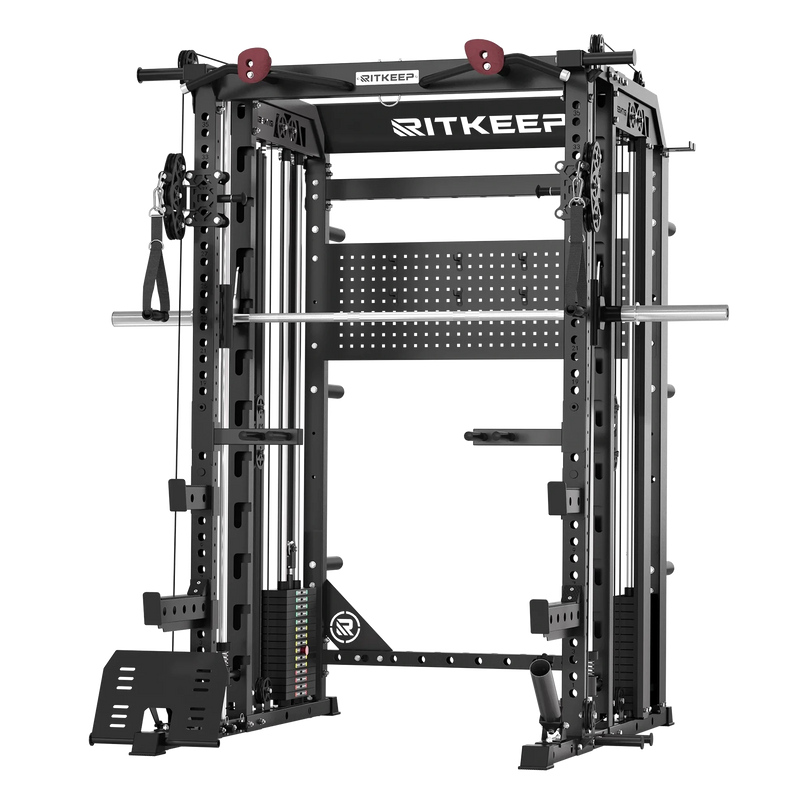
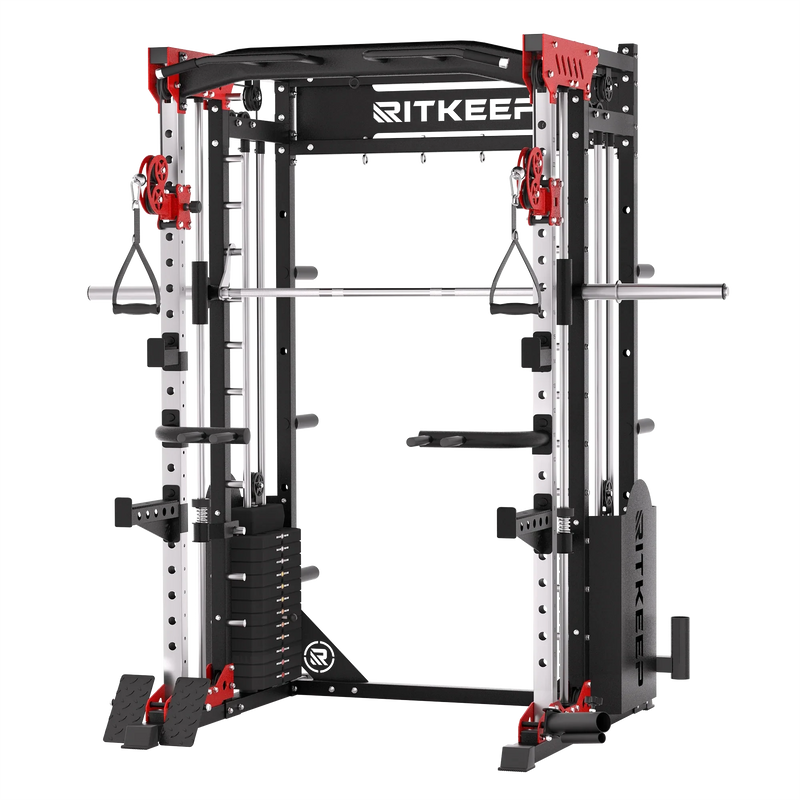
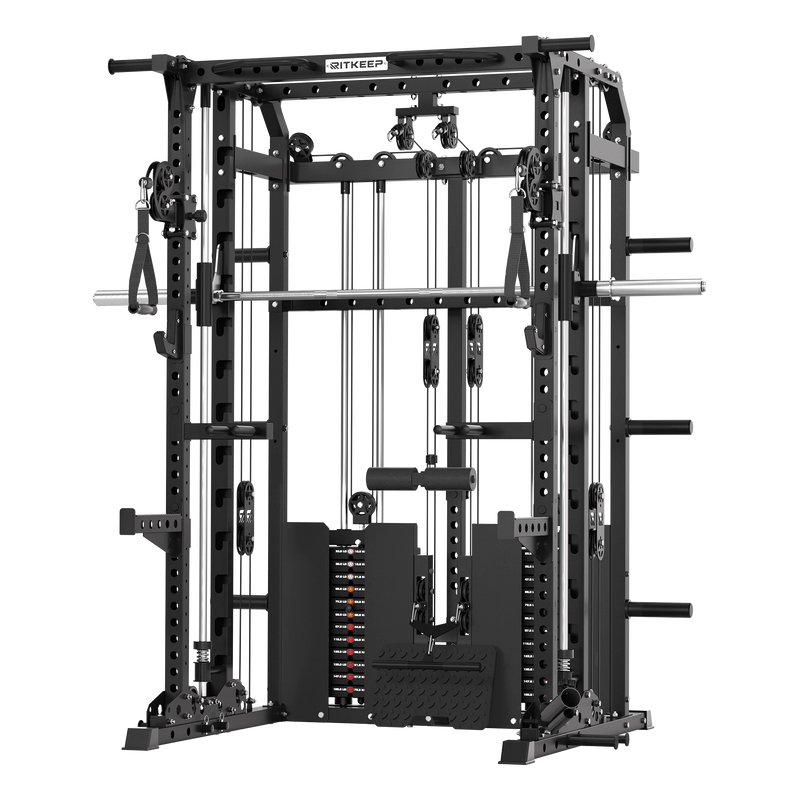
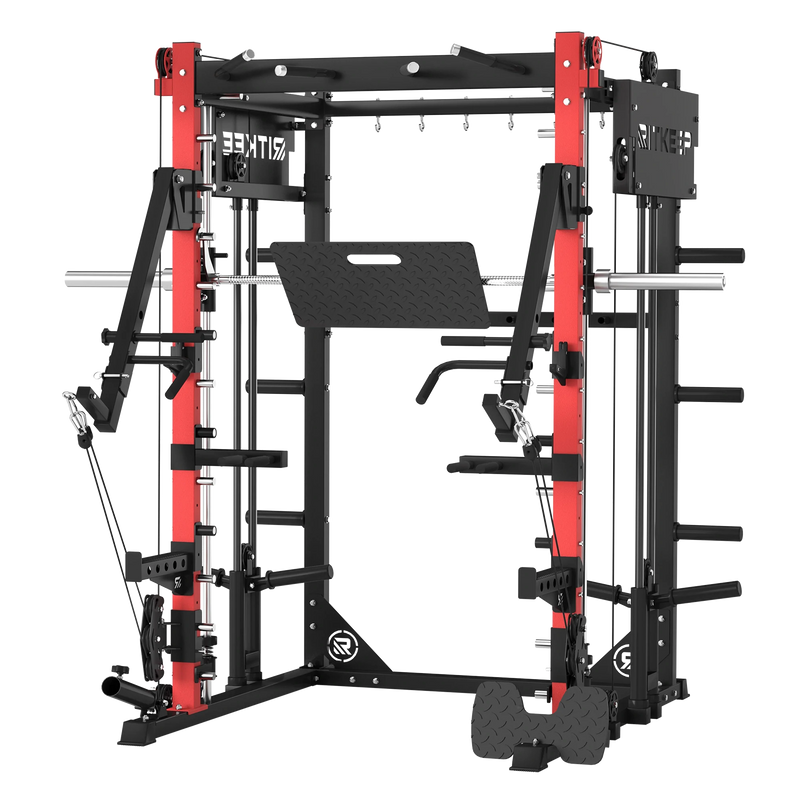
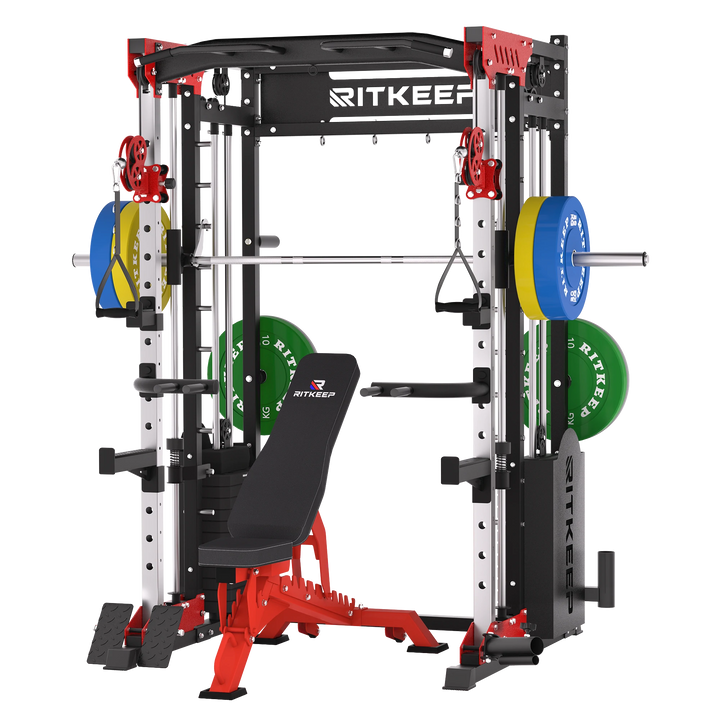
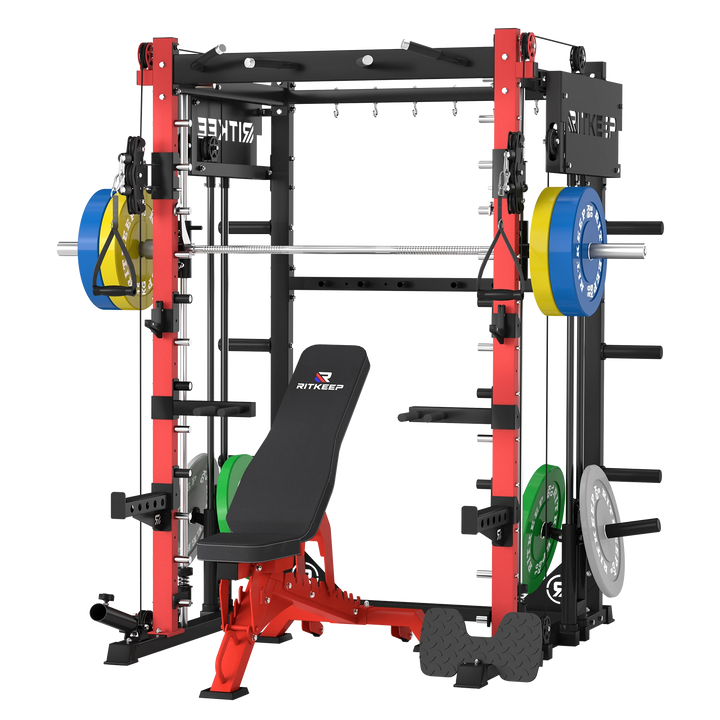
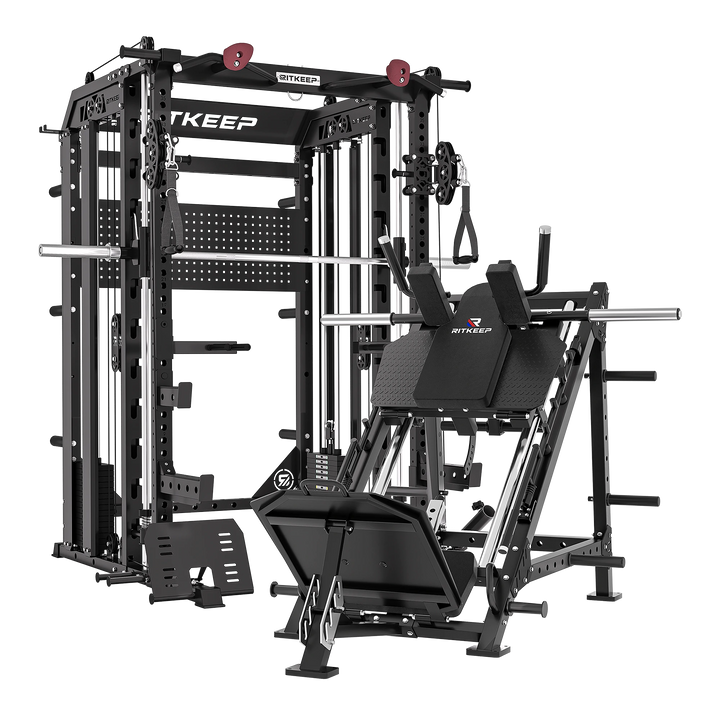
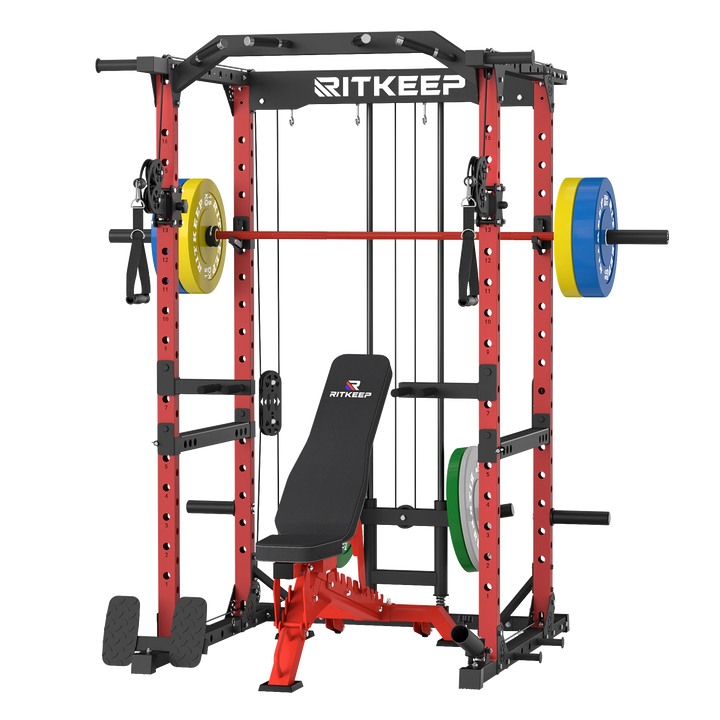
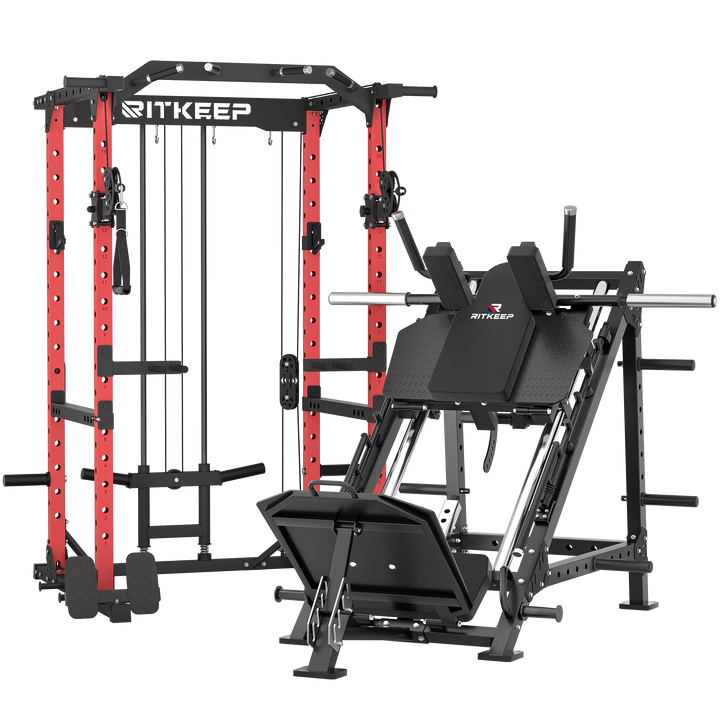
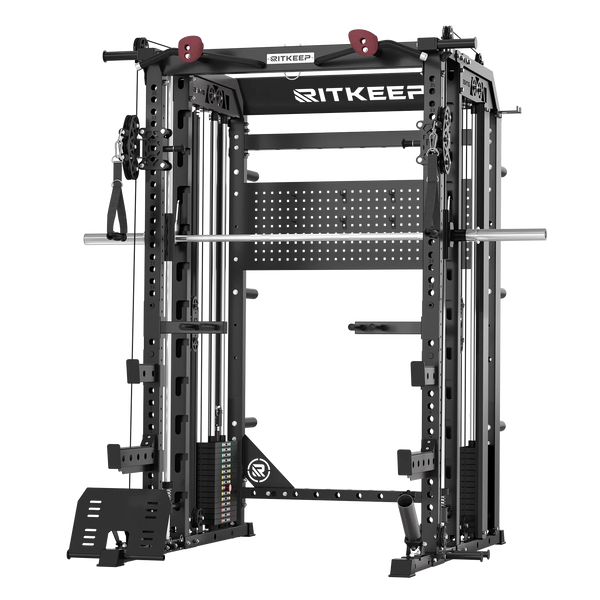
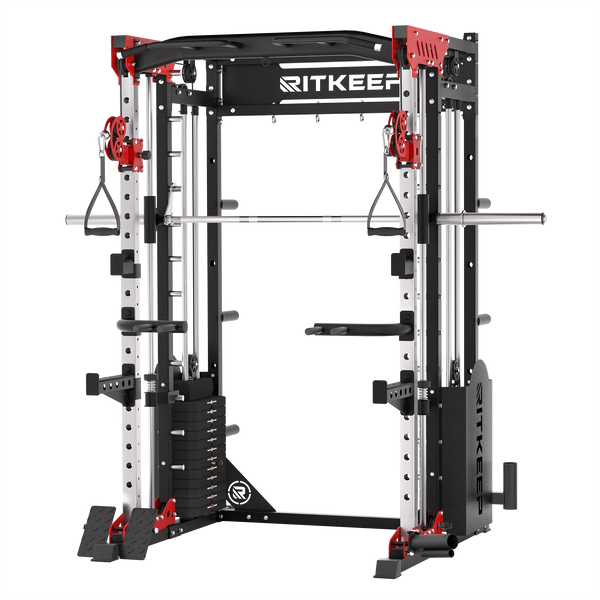
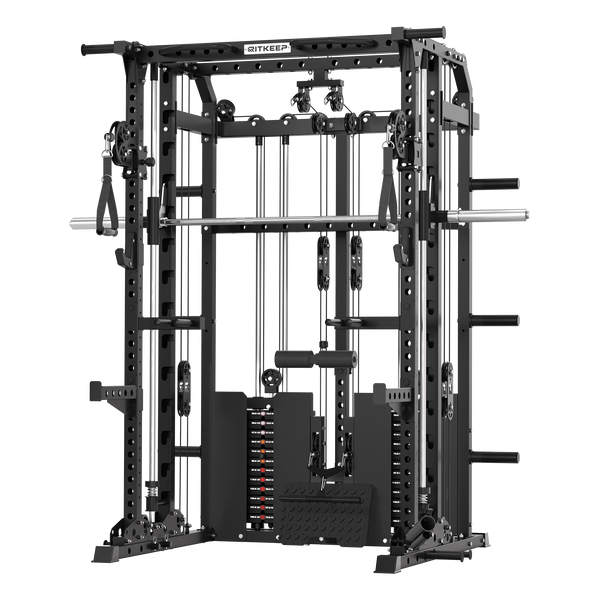
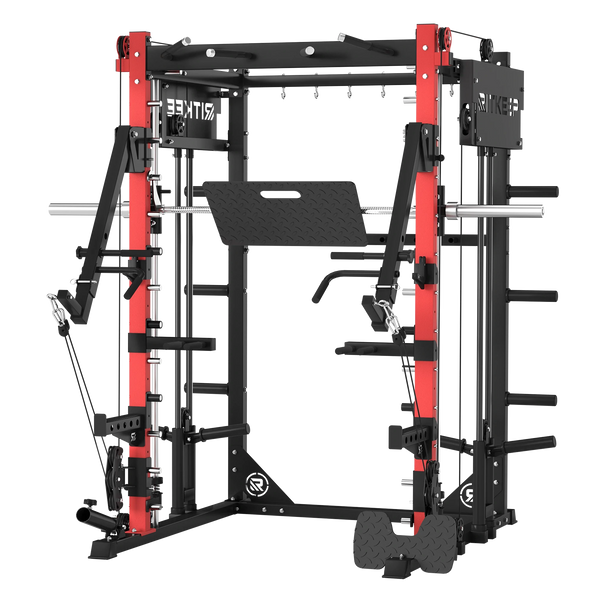
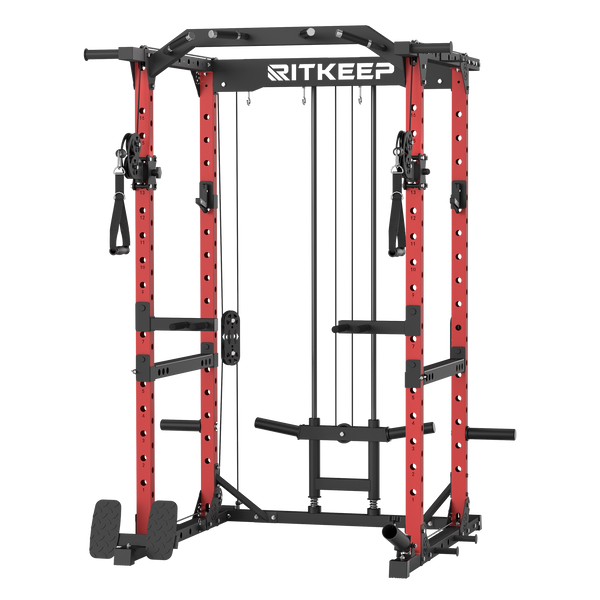
Combining both variations is the ultimate way to achieve fully comprehensive back development. To bring this versatile training into your own space, RitKeep Fitness home gym equipment is an excellent choice.
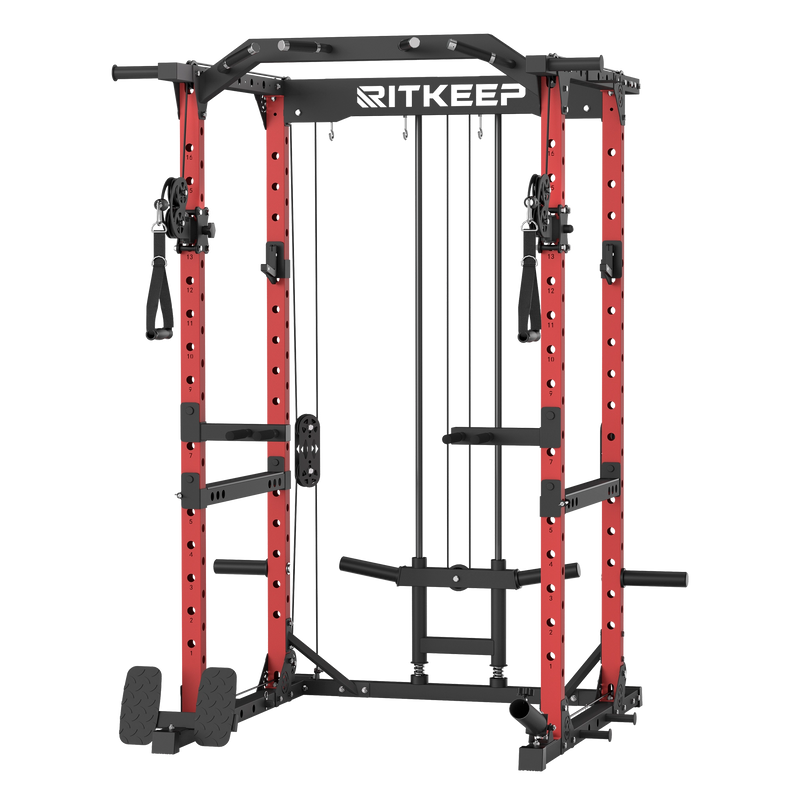
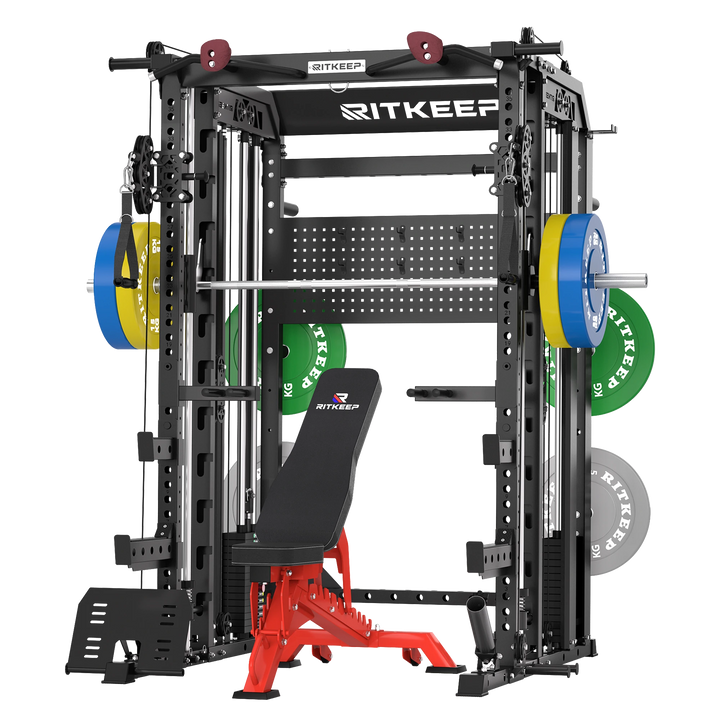
Both our Smith Machine and Power Rack feature an adjustable pulley system (cable machine) and come complete with a variety of free lat pulldown attachments, giving you everything you need to build a stronger back.
References
- PUBMED: Effects of grip width on muscle strength and activation in the lat pull-down — This study concludes that while changing grip width alters specific muscle recruitment patterns, both wide and narrow placements are highly effective for overall lat development.
- NASM: The Biomechanics of the lat pulldown: muscles worked, GRIPS, & FORM — An expert guide detailing how hand placement, elbow tracks, and torso angles dictate joint safety and muscle activation during vertical pulling motions.