



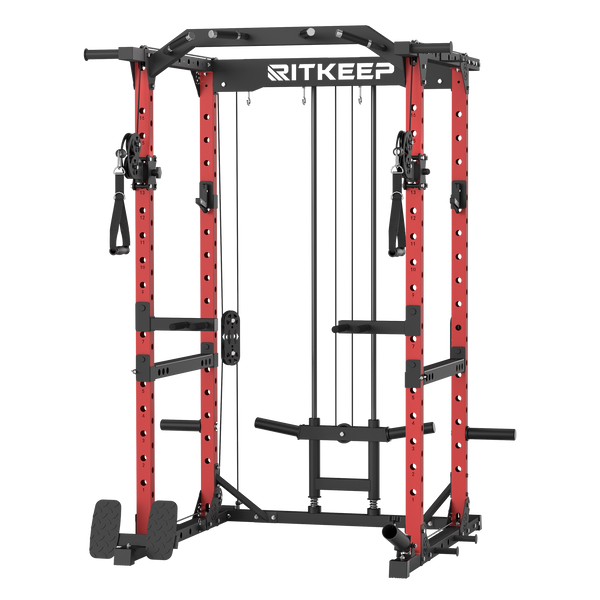
How to Choose the Right All-in-One Trainer: The Complete Home Gym Guide
Introduction
You're planning your home gym. On one hand, you dream of powerful free-weight training. On the other hand, you face very real limits on space and budget.
Here's the pain point: buying a power rack, a functional trainer, a Smith machine, and a pull-up bar separately is expensive. Together, they could eat up half your garage. Pick the wrong equipment, and you'll not only waste money but also end up with gear that's either too complicated or missing key features—left to gather dust.
The suspense: many "all-in-one trainers" on the market claim to be "one machine, one gym." But are they really as magical as advertised?
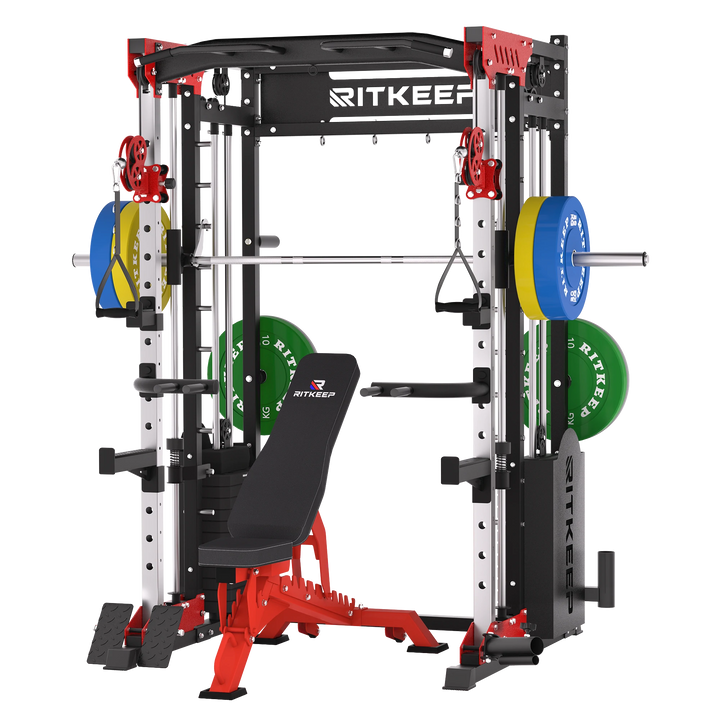
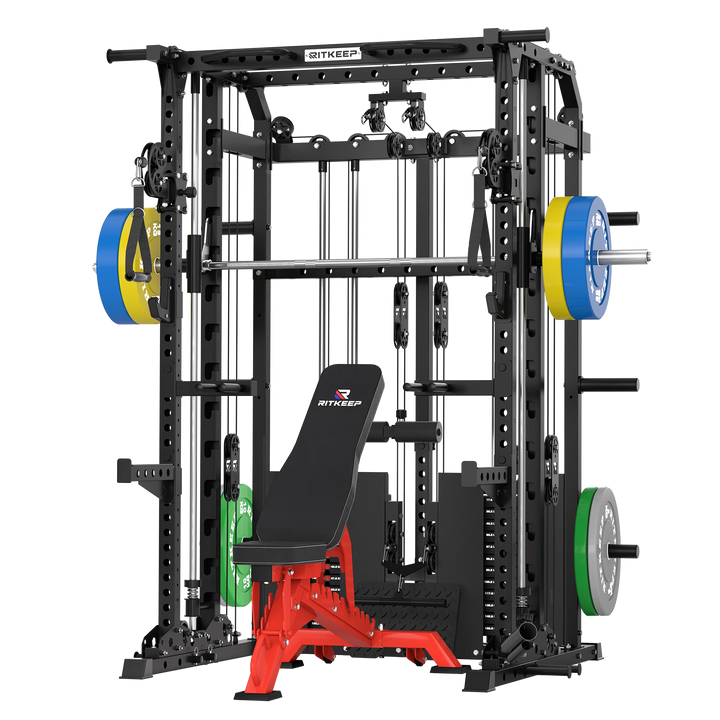
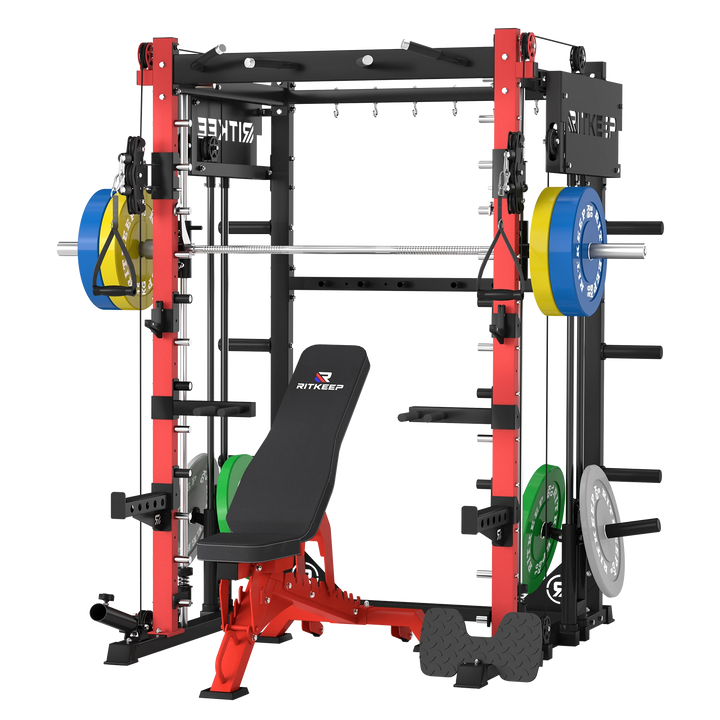
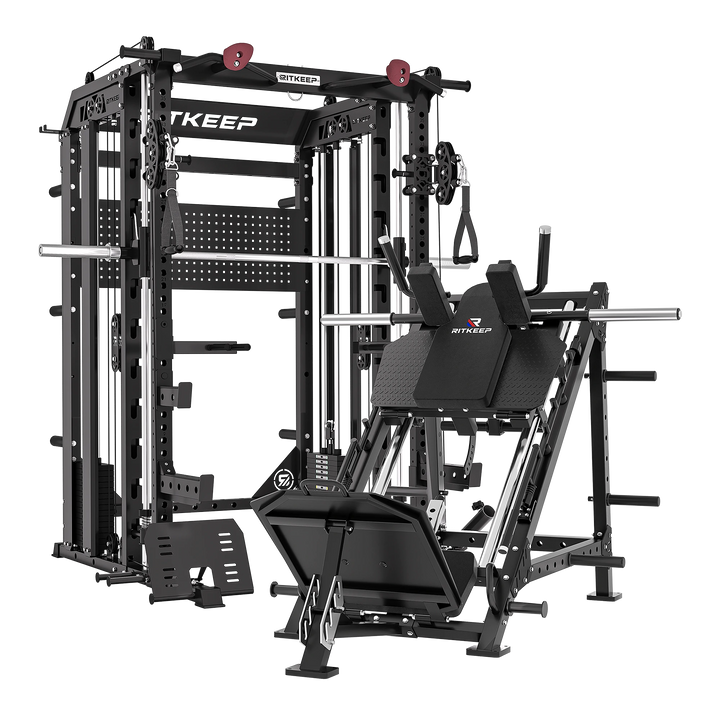
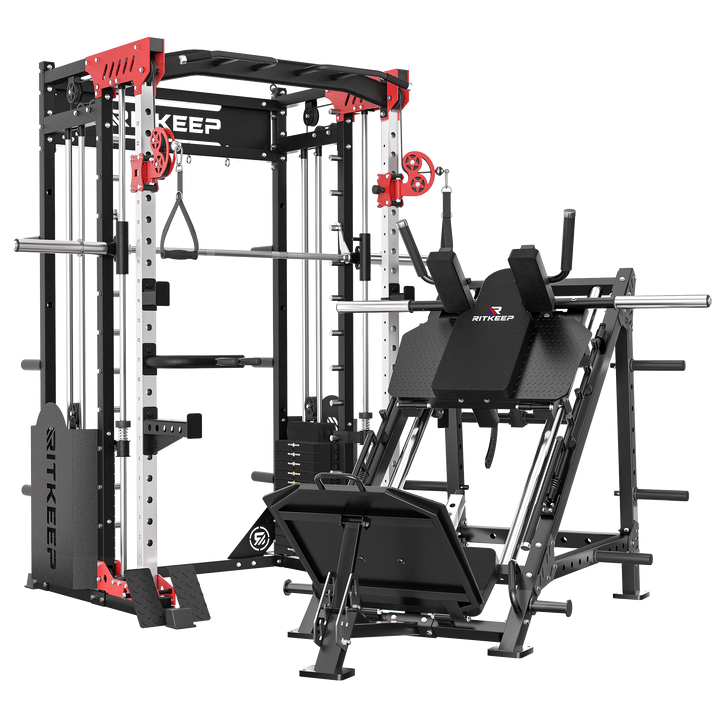
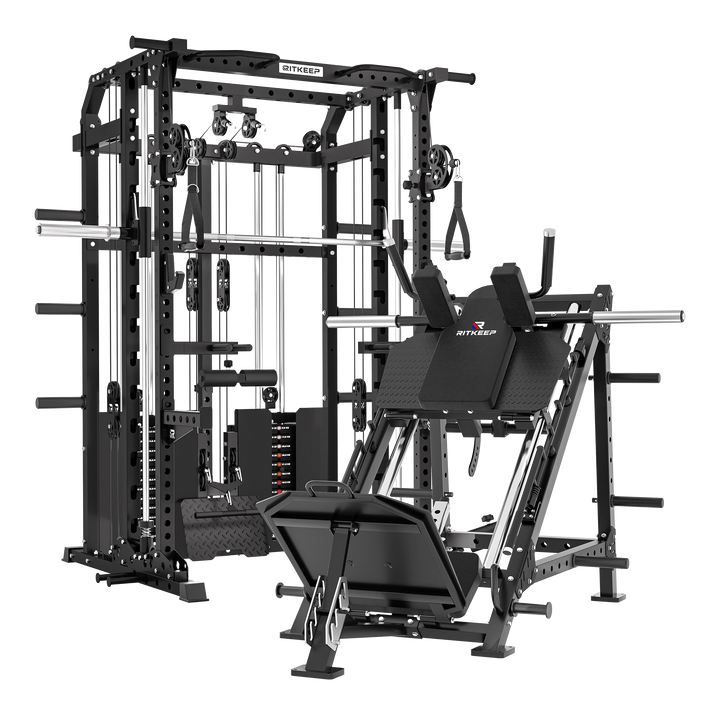
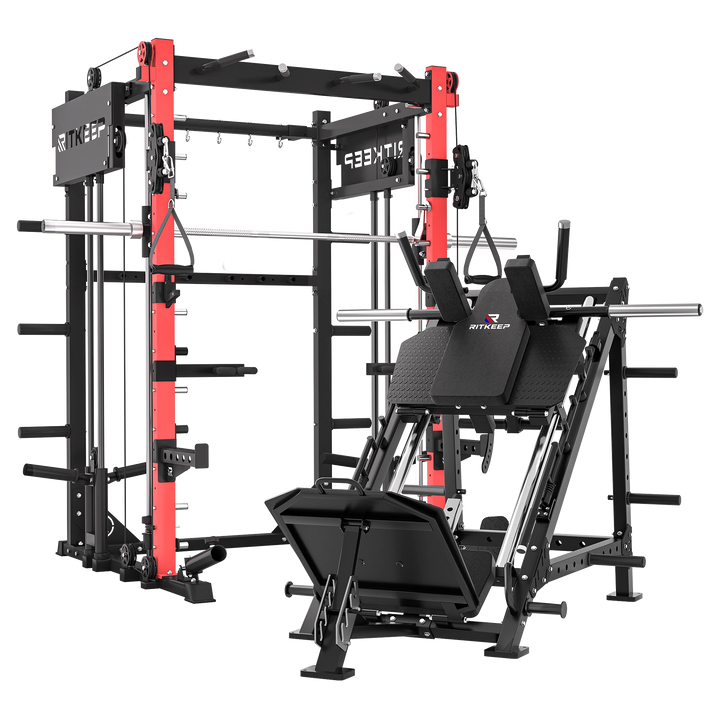
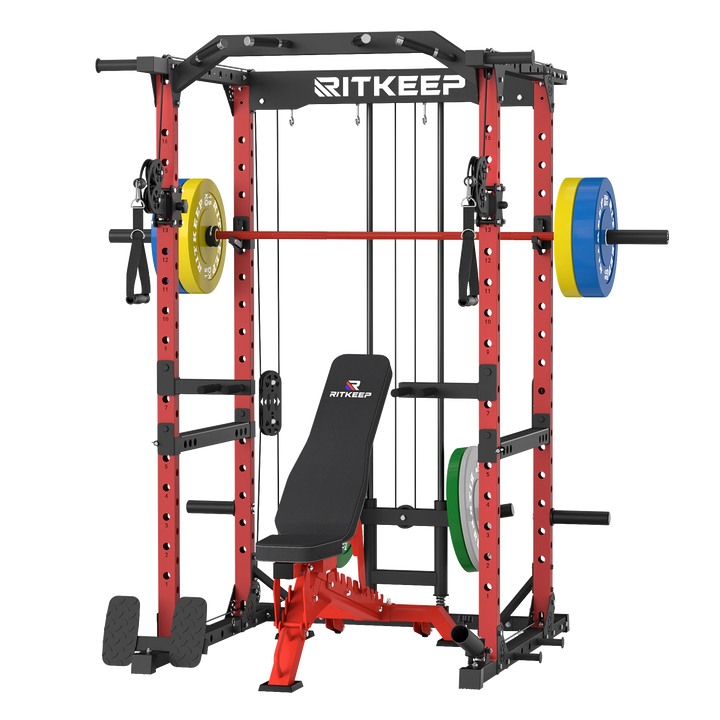
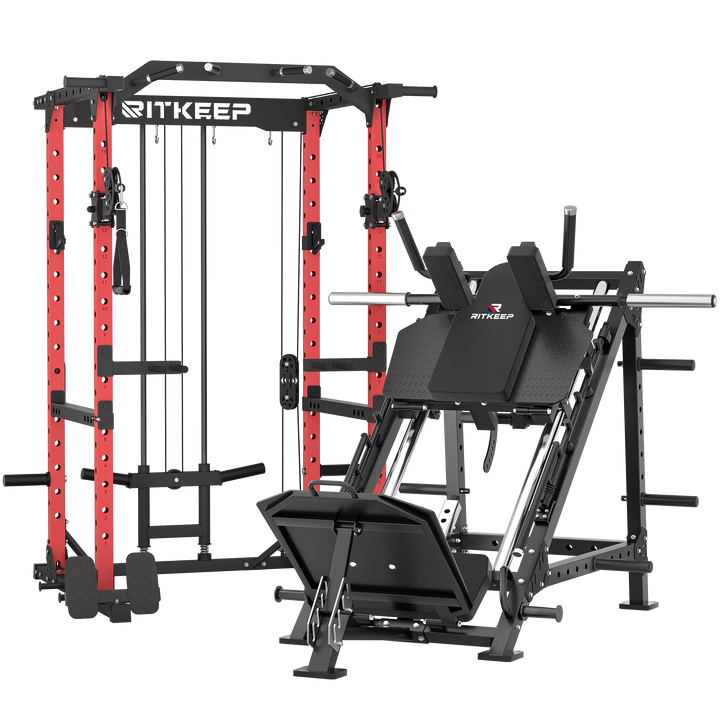
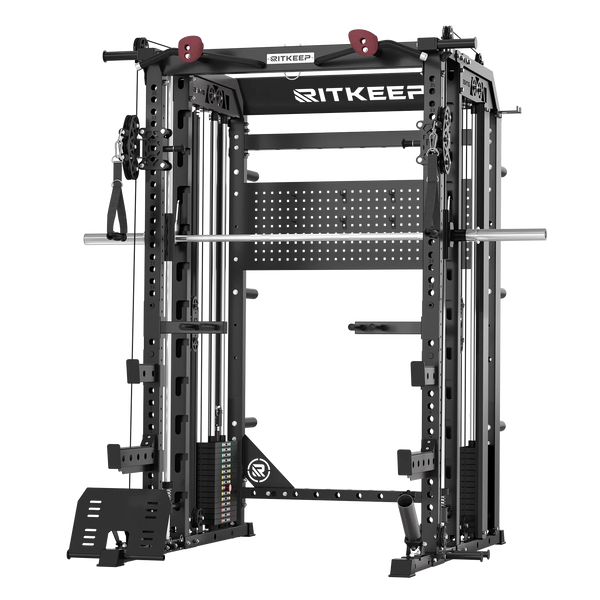
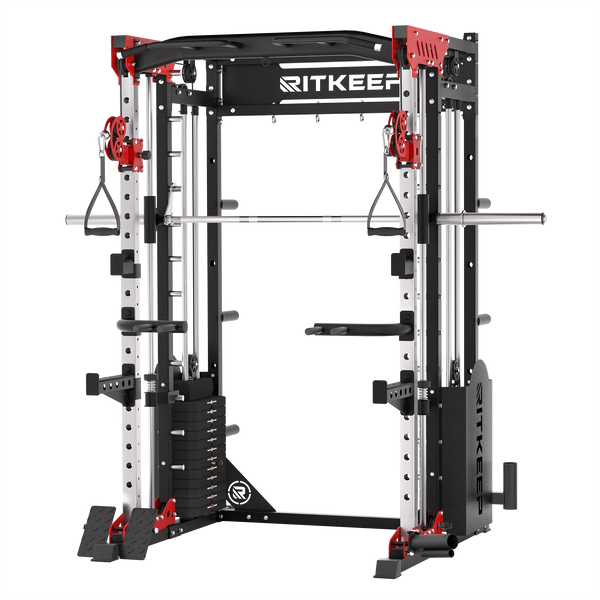
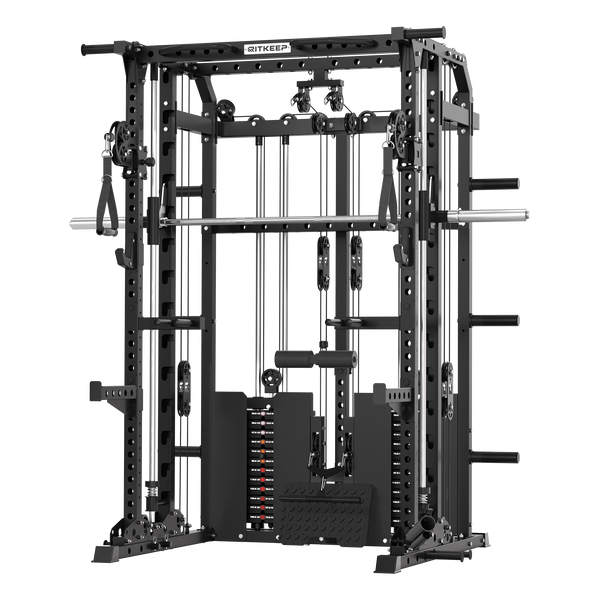
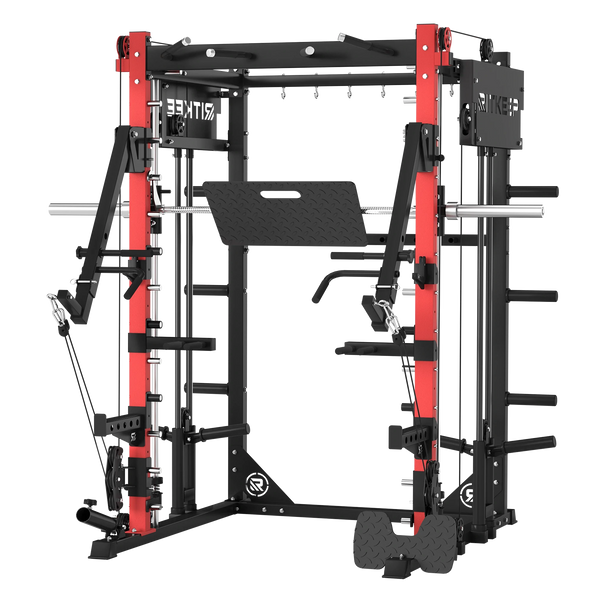
This guide provides a complete selection framework—from training goals, space assessment, budget planning, and key component analysis to product type comparisons. It will help you find the best all-in-one trainer for your needs from brands like RitKeep.
Preview of what's covered: Defining your training goals, space and budget evaluation, the three main types of all-in-one trainers, breakdown of critical specifications, RitKeep product line comparison, a selection checklist, and FAQ.

Define Your Training Goals First
Don't look at any price tags before you know what you want to achieve.
Questions you need to answer:
- What is your primary training goal? — Hypertrophy, powerlifting, functional fitness, or fat loss/shaping?
- Which training style do you prefer? — Free weights, Smith machine guided training, cable training, or a mix?
- Who will be the main user? — Single user, or multiple family members?
- What is your current training level? — Beginner, intermediate, or advanced?
Matching goals to equipment types:
- If your goal is powerlifting — you need a solid power rack and free weights. The Smith machine component of an all-in-one trainer may not help much.
- If your goal is hypertrophy/physique training — an all-in-one trainer is a great choice, letting you perform both compound and isolation exercises on one machine.
- If your goal is functional/full-body training — pay close attention to the cable system quality. A 2:1 pulley ratio and sufficient cable travel are key.
- If the machine will be shared by family members — you need a wide adjustable resistance range, simple operation, and good safety features.
Part 3: Assess Your Space
This is where most mistakes happen and is a leading cause of returns.
Common misconception: Don't just look at the "product dimensions" in the manual—that's only the static footprint of the machine itself.
What you need to measure:
- Ceiling height: Most all-in-one trainers stand 208–229 cm tall. You also need an extra 15–30 cm above for pull-ups. If you're setting up in a basement, measure the actual height from floor to the lowest joist or beam. The ANVIL S1, for example, stands 212 cm tall, while the Nimitz N1 requires 214.5 cm.
- Width: The machine itself is typically about 183 cm wide. But with an Olympic barbell (213 cm long) and space to load plates on both sides, you actually need 259–274 cm of width.
- Depth: The machine itself is about 152–183 cm deep. The Smith machine's bar path and placement of an adjustable bench require additional clearance. The ANVIL S1 has a compact depth of just 145 cm, making it ideal for tighter spaces.
- Floor protection: All-in-one trainers are heavy (the Nimitz N1 weighs 327 kg, the PMAX-5600 weighs 296 kg, the ANVIL S1 weighs 350 kg). With weight plates loaded, total weight can easily exceed 454 kg. Install 1.9 cm thick rubber stall mats or dedicated gym flooring beforehand.
- Clearance around the machine: Leave at least 61–91 cm of open space around the machine for loading plates, adjusting the bench, and performing cable movements. The PMAX-4750 manual recommends allowing at least 51 cm of side clearance to load plates comfortably.
- A simple rule of thumb: Your usable space should be at least 1.5 times the machine's footprint for a comfortable workout experience.
Set a Realistic Budget
All-in-one trainers vary widely in price. Setting a clear budget range is the most effective way to narrow your options.
Price ranges (U.S. market, 2025–2026, including weight stacks or plate loading):
- Entry level ($800–$1,500): Basic features, plate-loaded design, thinner steel, basic pulley system. The PMAX-4750 falls into this range. It combines a power rack, dual pulley system, Smith machine, chin-up station, dip station, and low row system into a single power rack footprint—a true value pick.
- Mid-range ($1,500–$2,800): More complete features, some with weight stacks, 2:1 pulley ratio, 14-gauge steel. RitKeep PMAX-5600 falls here, offering dual 75 kg weight stacks and a 6-in-1 design.
- High-end/commercial-grade home use ($2,800–$5,000+): Dual weight stacks, switchable pulley ratios, 13-gauge or thicker steel, linear bearings, powder-coat finish. RitKeep Nimitz N1 falls here, with 13-gauge steel, dual 70 kg steel weight stacks, and a counterbalanced Smith system.
Hidden costs:
- Weight plates (if you choose a plate-loaded machine)
- Adjustable bench
- Flooring and assembly tools
- Shipping (all-in-one trainers typically weigh 136–318 kg; shipping can cost $200–$500)
- Extra attachments (e.g., ropes, straight bars, triceps ropes)
ROI perspective: Annual family membership for two at a commercial gym ≈ $1,200–$2,400. A $2,500 all-in-one trainer pays for itself in 2–3 years. Buying separately — power rack ($500–$1,000) + functional trainer ($1,000–$2,000) + Smith machine ($800–$1,500) — totals $2,300–$4,500 and takes up more space.
Types of All-in-One Trainers
Type 1: Smith Machine + Functional Trainer
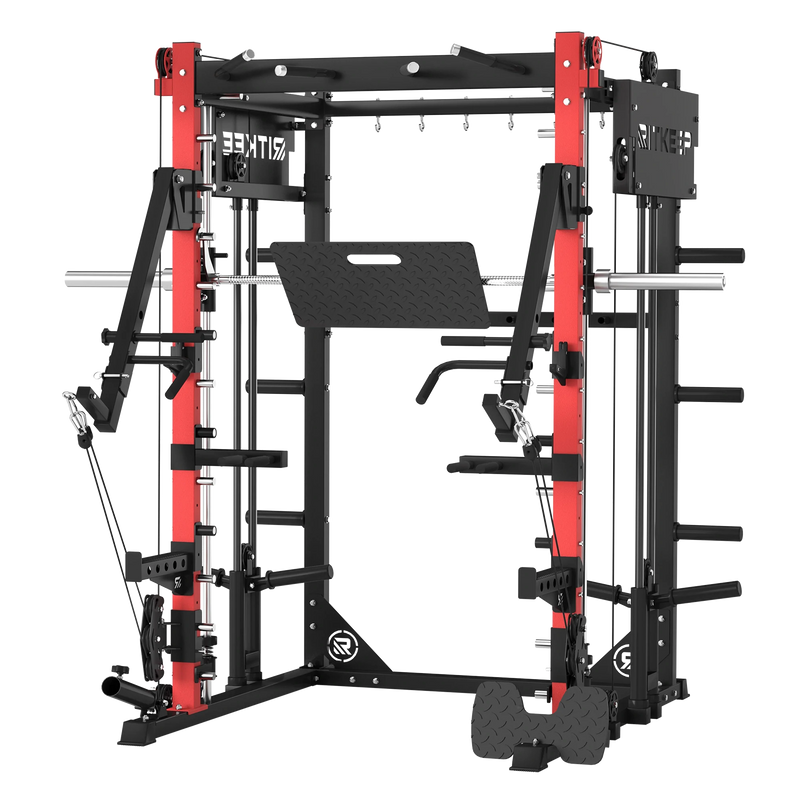
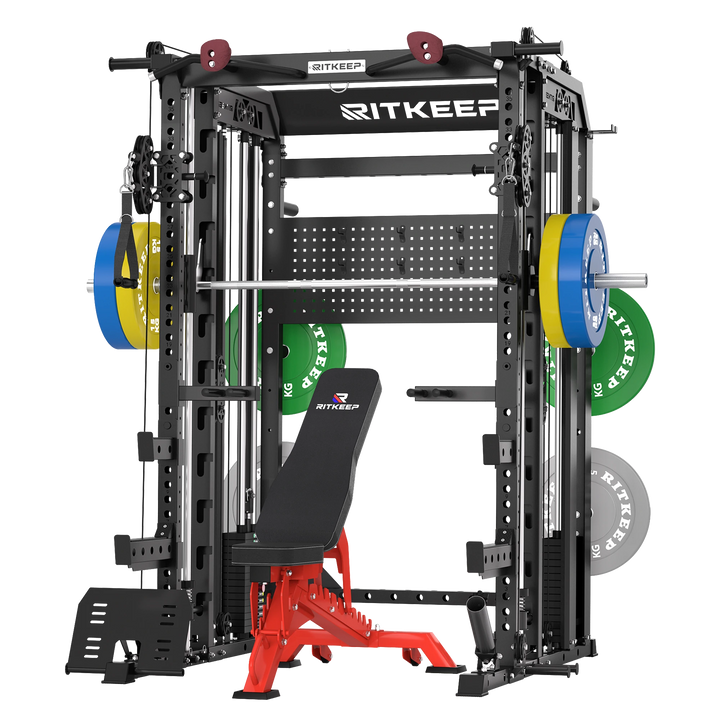
This is the most common type for home gyms. It provides a Smith machine (or half-rack) plus dual cable pulley systems on one machine.
- Pros: Safely perform heavy bench presses and squats while also doing cable crossovers, face pulls, lat pulldowns, etc. No need to buy a separate functional trainer.
- Best for: Most home users who want to train multiple muscle groups in a limited space.
- Example models: RitKeep Nimitz N1, PMAX-5600.

Type 2: Power Rack + Integrated Cables
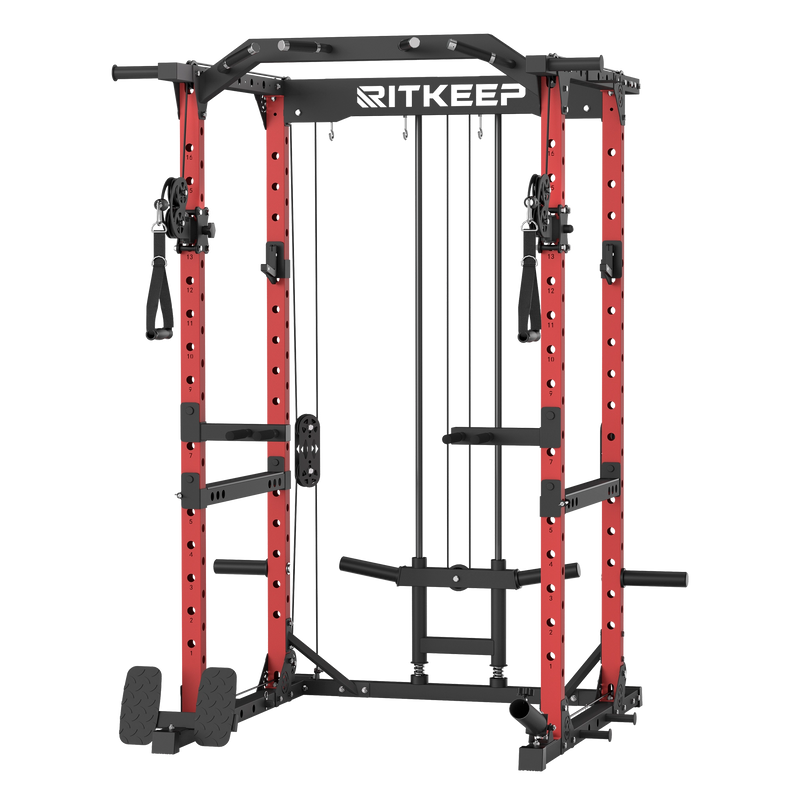
A power rack with cable pulley systems added to the rear or sides.
- Pros: Full free-weight training functionality (squats, bench, deadlifts, etc.) plus cable exercises.
- Cons: No Smith machine. If you want the safety of a Smith machine for failure training or heavy lifts without a spotter, this type won't work.
- Best for: Advanced lifters who prioritize free weights and don't rely on Smith machine safety.
- Example model: RitKeep Destroyer M10 (pure power rack + crossover cables, no Smith bar).

Type 3: Fully Integrated (Smith + Power Rack + Functional Trainer)
All three core functions integrated into one machine—the most comprehensive all-in-one trainer.
- Pros: Complete training on one machine. You can use the front for free-weight power rack work, the Smith machine for guided lifting, and side/rear cables for isolation.
- Cons: Usually the most expensive type, and due to complexity, individual functions may not be as specialized as dedicated units.
- Best for: Users with ample budget who want maximum functionality and space efficiency.
- Example model: RitKeep Nimitz N1.

A simple decision path:
Need a Smith machine?
- Yes → Choose N1 or PMAX-5600; Also need a compact footprint? → Choose ANVIL S1
- No (just power rack + cables) → Choose Destroyer M10
The 5 Key Specs That Matter
These five specifications determine the true performance of an all-in-one trainer. Ignoring them can lead to wasted money.
1. Weight System: Weight Stack vs. Plate-Loaded
- Weight stack: Change resistance by inserting a selector pin—takes seconds. Higher cost, fixed stack weight (typically 68–91 kg per side). Very family-friendly.
- Plate-loaded: Use your own Olympic plates. Lower cost, theoretically unlimited maximum weight, but each change requires manually loading/unloading plates.
How to choose (weight stack):
Choose weight stack if you value speed of change, multiple users, and budget allows. The PMAX-5600 features dual 75 kg weight stacks; just insert the selector pin and change resistance in about 2 seconds. The 2:1 pulley ratio provides longer cable travel and smoother motion, while 23 cable height adjustment levels offer plenty of training options. If you prioritize training efficiency and whole-family convenience, the PMAX-5600 is one of the most feature-rich weight stack machines available.
How to choose (plate-loaded):
Choose plate-loaded if you already own many plates, need very high resistance, and don't mind slower changes. The PMAX-4750 lets you load your own Olympic plates directly onto the machine, eliminating the extra cost of built-in weight stacks. What's more, it supports both 1:1 and 2:1 switchable pulley ratios, giving you heavy direct resistance for rows and pulldowns when you need it, and smoother high-rep cable travel for flyes and face pulls. If you don't mind loading plates manually and want an "unlimited" weight ceiling, the PMAX-4750 deserves a close look.
2. Pulley Ratio (2:1 vs. 1:1 vs. Dual-Ratio)
- 2:1 ratio: Selecting 50 kg on the stack delivers about 25 kg of resistance at the handle. Longer cable travel and smoother motion. Ideal for flyes, face pulls, functional movements, and isolation work.
- 1:1 ratio: Selecting 50 kg delivers 50 kg of resistance. Better for rows, lat pulldowns, and heavy compound pulls.
- Dual-ratio system (switchable 1:1 and 2:1): Represented by the RitKeep Nimitz N1, which features dual independent 70 kg precision steel weight stacks and a crossover system with switchable pulley ratios. You get both training experiences on one machine—no compromise.
Conclusion: If your budget allows and you want versatile training, prioritize a model with switchable pulley ratios.
3. Guide Rod Mechanism (Linear Bearings vs. Nylon Bushings)
- Linear bearings: Steel balls roll along guide rods. Smooth and friction-free, whether the bar is empty or heavily loaded. A hallmark of high-quality all-in-one trainers. RitKeep Nimitz N1 uses industrial-grade precision linear bearings.
- Nylon bushings: Sliding friction. Sticky start, can jerk under heavy loads, and accuracy degrades over time with wear.
How to tell: Look for spec sheets that explicitly state "linear bearings" or "industrial-grade precision linear bearings."
Conclusion: For heavy training (squats over 136 kg) or if you want the smoothest feel, choose linear bearings—they ensure long-term reliability. RitKeep's PMAX-5600, ANVIL S1, PMAX-4750, and Destroyer M10 also feature linear-bearing rails.
4. Steel Gauge and Frame Stability
- Steel gauge: 13-gauge (2.5–3 mm) is typical for high-end models; 14-gauge (2 mm) is mainstream mid-range. Thicker steel means a heavier, more stable machine. Nimitz N1 uses 13-gauge steel; PMAX-5600, ANVIL S1, PMAX-4750, and Destroyer M10 use 14-gauge alloy steel.
- Total machine weight: Lightweight assembled machines (under 136 kg) may wobble when you rerack heavy weights. High-end models often weigh 272–363 kg.
- Inspect weld quality: Look for uniform, smooth welds with no porosity.
5. Attachment Compatibility and Accessories
- J-hook liners: Confirm that J-hooks have plastic liners to protect your barbell knurling.
- Weight plate storage posts: Check that the machine has enough storage for plates. Nimitz N1 includes a plate holder.
- Cable attachments: See which attachments come standard. Nimitz N1 includes a dip bar, safety bar, J-hook, landmine, foot board, plate holder, short straight bar, T-bar, lat pulldown bar, D-handle, and triceps rope. PMAX-4750 comes with safety spotter arms, J-hooks, rowing foot plate, lat pulldown bar, dip bar, single handles, T-bar row, and landmine. Destroyer M10 includes a lat pulldown bar, T-bar row, straight bar, landmine, dip bar, band pegs, footboard, and a 2-level handle.
- Third-party compatibility: Verify the cable connector type and whether it works with common aftermarket attachments. Destroyer M10's uprights are 5×5 cm (50×50 mm) with 2.6 cm holes, compatible with many standard accessories.
Who Is Each Type For – RitKeep Product Line Comparison
| Model | Type | Pulley Ratio | Weight System | Key Features | Best For |
|---|---|---|---|---|---|
| Nimitz N1 (Pro) | Smith + functional trainer | Switchable 1:1 & 2:1 | Dual 70 kg stacks; Pro adds +100 kg plate-loaded | 13-gauge steel; linear bearings; 200°C electrostatic powder coat; 12 locking positions; 33 cable height levels | Families with diverse strength levels; those wanting full functionality; higher budget |
| PMAX-5600 | Smith + functional trainer | 2:1 | Dual 75 kg stacks (150 kg total, 190 kg optional) | 6-in-1 design; 2:1 pulley system; 23 cable height positions; 12 safety pegs; 28mm diamond-knurled chrome bar | Users who want complete features at a friendlier price; 2:1 ratio suits daily needs; room for strength progression |
| ANVIL S1 | Smith + functional trainer | 2:1 | Dual rear 75 kg stacks | Compact design (145 cm depth); no cable setup for lat pulldown/low row; 33 cable height positions; 200° rotating pulleys | Very tight spaces but still need full functional trainer and Smith machine |
| PMAX-4750 | Smith + functional trainer | Switchable 1:1 & 2:1 | Plate-loaded | 6-in-1 design; dual-ratio switching; 12 cable height levels; 15 kg Smith bar | Already own weight plates; want maximum weight ceiling; tight budget |
| Destroyer M10 | Power rack + cables (no Smith) | 2:1 | Plate-loaded | Pure power rack structure; 550 kg safety arms; 15 cable levels; 16 × 2.6 cm hole uprights | Prioritize free-weight barbell training and do not rely on the Smith machine safety |
10-Step Selection Checklist
Check off each item before clicking "Buy Now":
- Have you defined your primary training goal?
- Have you measured your space (length, width, height, including cable travel and barbell loading clearance)?
- Is your ceiling height at least 213 cm (2.1 m)?
- Do you have adequate clearance (at least 46 cm on each side, 61–91 cm in front)?
- Have you set your total budget (including plates, bench, flooring, shipping)?
- Have you decided between weight stack and plate-loaded?
- Have you chosen your preferred pulley ratio (2:1, 1:1, or dual-ratio)?
- Have you checked the guide rod mechanism (linear bearings vs. nylon bushings)?
- Have you reviewed the steel gauge and total machine weight?
- Have you confirmed what attachments are included and compatibility with third-party accessories?
Frequently Asked Questions
1. Do all-in-one trainers really replace multiple machines? Are they worth buying?
Yes. A well-designed all-in-one trainer combines a Smith machine, functional trainer, power rack, pull-up station, dip station, and low row into a single footprint. Models like the Nimitz N1 integrate 6 built-in systems in one powerhouse unit. For most home users, the space savings and cost efficiency easily outweigh the minor compromises compared to separate commercial units.
2. Is an all-in-one trainer more cost-effective than buying separately?
Absolutely. Buying separately totals $2,300–$4,500 and takes up much more floor space. A mid-range all-in-one like the PMAX-5600 (around $1,800–$2,300) gives you all three functions in one machine.
3. My basement ceiling is low (208 cm). Can I install an all-in-one trainer?
Check the machine's exact height. The ANVIL S1 requires 212 cm, the PMAX-4750 requires 211 cm, the Destroyer M10 requires 212 cm, and the Nimitz N1 requires 214.5 cm. If your ceiling is under 213 cm, you may need to look for shorter models or consider removing the pull-up bar.
4. I'm a beginner. Is an all-in-one trainer too much for me?
Not at all. In fact, a counterbalanced machine like the Nimitz N1 is ideal for beginners. Its Smith bar connects directly to the weight stacks, reducing the starting weight for smooth, effortless lifting. The guided Smith bar removes the intimidation factor of balancing free weights, letting you focus on proper form.
5. Is an all-in-one trainer suitable for multiple family members?
Yes—if you choose the right type. Counterbalanced machines like the Nimitz N1 are excellent for households with diverse strength levels. The ultra-light starting bar (10 kg felt weight) accommodates beginners, seniors, and rehab users, while experienced lifters can still load heavy plates.
6. Which machine is safest for elderly family members and children?
The Nimitz N1. Its counterbalanced design connects the Smith bar directly to the weight stacks, reducing the starting weight for smooth, effortless lifting. The guided Smith bar removes stabilization worries, and built-in safety hooks let you rack the bar at any of 12 locking positions. It's specifically designed for whole-family home gym use.
7. I live in an apartment. Which model saves the most space?
The ANVIL S1 is your best choice, with a compact depth of just 145 cm. Its rear-mounted dual weight stacks keep the front area open for Smith work, and the built-in lat pulldown and low row system requires no setup or carabiner changes—unlike traditional multi-function machines where these movements must be performed in front. The internal dual-drive pulley system allows you to perform lat pulldowns and rows inside the machine's footprint, maximizing space efficiency.
8. Can the weight stack be linked to the Smith bar to increase resistance?
No. In counterbalanced models like the Nimitz N1, the linkage is designed to reduce the empty bar's starting weight (to be beginner-friendly), not to stack resistance on top of the bar. If you need greater effective resistance, add weight plates directly onto the Smith bar, just as you would on any other Smith machine.
Part 10: Final Takeaway – Buying Decision Summary
Integration and convenience: All-in-one trainers combine a Smith machine, power rack, functional trainer, and more into a single footprint, saving space and money. Choose the type that matches your goals.
Key components determine long-term experience: Pulley ratio, weight system type, steel gauge, and linear bearings are critical for performance and durability. Don't overlook them.
Space and budget first: Always verify ceiling height, floor strength, and clearance before buying. Calculate your total budget including hidden costs to avoid overspending.
RitKeep model recommendations:
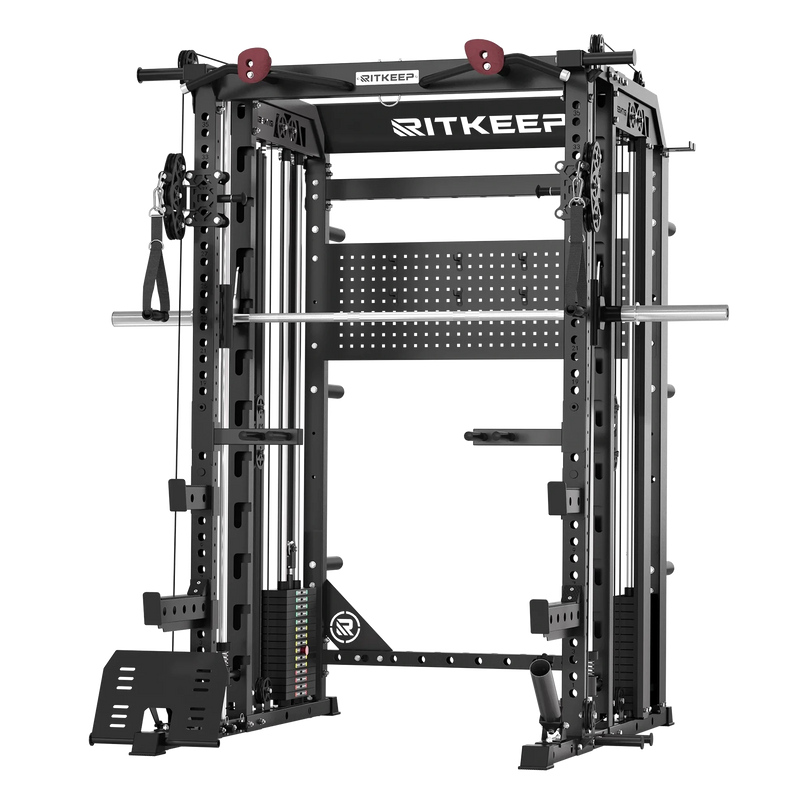
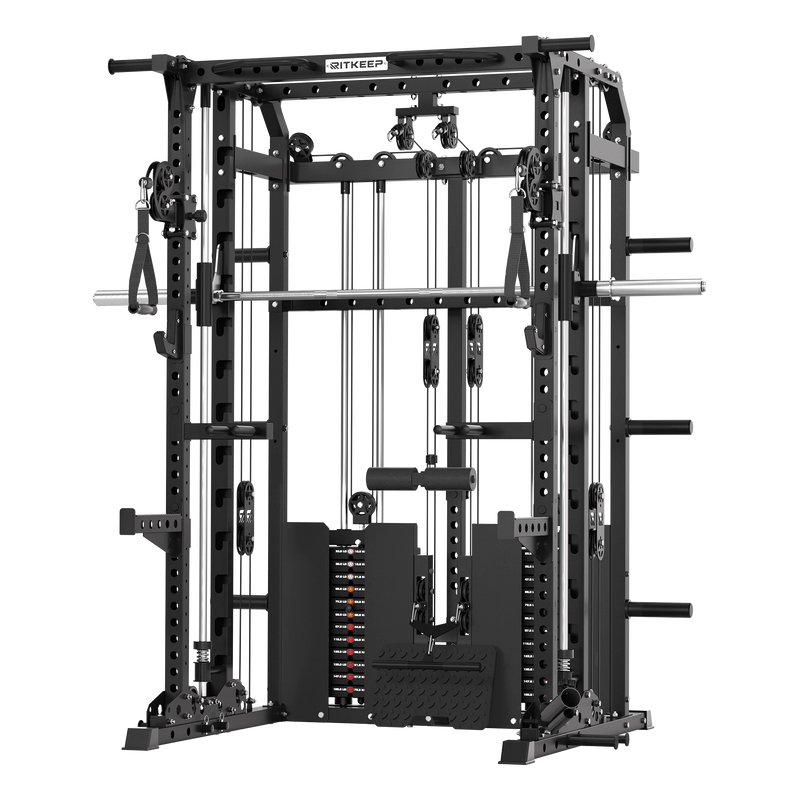
- Maximum features → N1 – 13-gauge steel, switchable 1:1 & 2:1 ratios, counterbalanced Smith, linear bearings. The ultimate all-in-one.
- Small space → S1 – Only 145 cm deep, rear-mounted stacks, no-setup lat pulldown. Perfect for apartments or tight rooms.
- Plate-loaded on a budget → PMAX 4750 – Dual-ratio switching, 6-in-1 design. Great value if you already own plates.
- Free-weight priority → M10 – Pure power rack with cable crossover. No Smith bar—for those who want real free-weight feel.
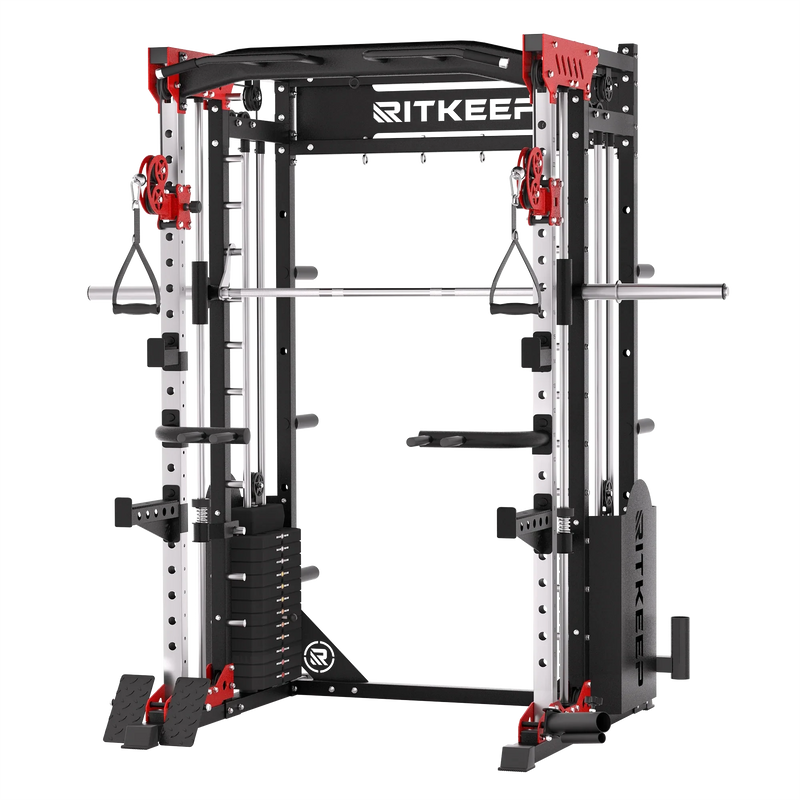
- Balanced features and price → PMAX-5600 – 2:1 ratio, dual 75 kg stacks, 23 cable positions. The sweet spot of value and functionality.
Investing in an all-in-one trainer is a long-term decision. The right machine will support your training journey for many years. Doing your homework upfront is far better than realizing a machine doesn't fit after it arrives.